
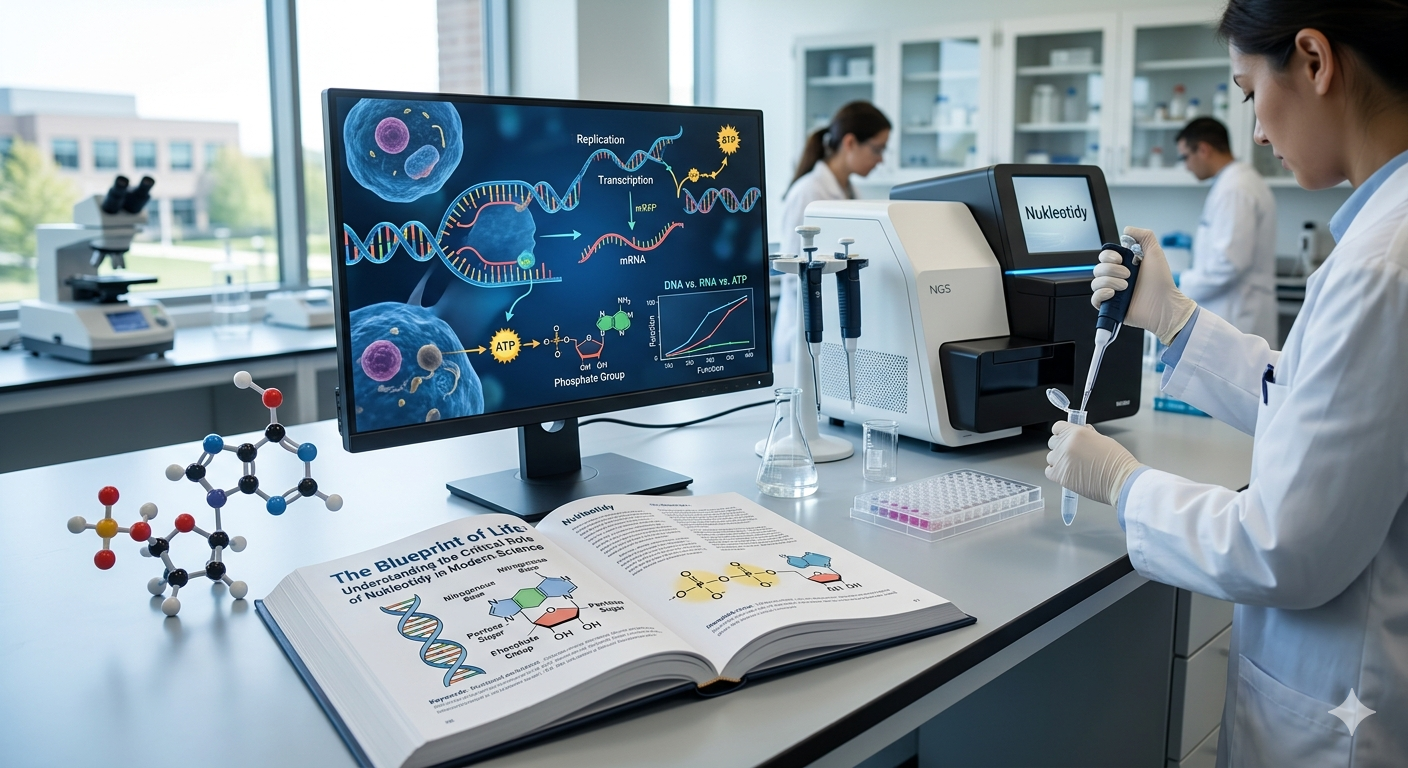
In the vast, microscopic world of molecular biology, few structures hold as much power as nukleotidy (nucleotides). Often described as the “building blocks” of life, these organic molecules are far more than mere structural units; they are the fundamental language through which every living organism stores, replicates, and transmits genetic information. From the towering redwoods to the invisible bacteria in our soil, the sequence and function of these molecules dictate the very essence of biological existence. In today’s rapidly evolving scientific landscape, understanding these components is no longer reserved for lab-coat-wearing researchers. It has become essential for anyone interested in the future of personalized medicine, forensic science, and the burgeoning field of synthetic biology.
As we navigate through the complexities of genomic sequences, the significance of these molecules extends into our daily lives—influencing how we treat chronic diseases and how we engineer sustainable solutions for a growing population. This comprehensive guide offers a deep dive into the chemical architecture, biological functions, and technological applications of these vital units. By the end of this exploration, you will possess a sophisticated understanding of how these microscopic entities drive macroscopic change, providing you with the knowledge to appreciate the molecular machinery that keeps the world turning. Whether you are a student, a tech enthusiast, or a professional in the biotech sector, this article serves as your definitive resource for mastering the science of the genetic code.
The Fundamental Structure of a Nucleotide
Every single unit in the genetic chain is composed of three distinct chemical components that work in perfect harmony. These components ensure that the molecule is stable enough to store data but flexible enough to participate in rapid chemical reactions within the cell.
- Nitrogenous Base: The information-carrying part, categorized into purines (adenine, guanine) and pyrimidines (cytosine, thymine, uracil).
- Pentose Sugar: A five-carbon sugar, either ribose (in RNA) or deoxyribose (in DNA).
- Phosphate Group: The “backbone” connector that links individual units into long, resilient chains.
DNA vs. RNA: The Chemical Distinction
While both DNA and RNA utilize these building blocks, the specific type of sugar and the selection of bases differ, leading to vastly different roles within the cellular environment. DNA serves as the permanent blueprint, while RNA acts as the versatile messenger.
- Sugar Component: DNA uses deoxyribose (lacking one oxygen atom), making it more stable for long-term storage.
- Base Variations: DNA uses thymine, whereas RNA replaces it with uracil to facilitate temporary signaling.
- Structural Form: DNA is typically a double helix, while RNA is usually single-stranded and capable of folding into complex shapes.
The Energy Currency: ATP and Beyond
Beyond genetics, certain nukleotidy serve as the primary source of energy for cellular processes. Adenosine triphosphate (ATP) is perhaps the most famous example, acting as a rechargeable battery for every muscle contraction and nerve impulse.
- Phosphate Bonds: Energy is stored in the high-energy bonds between phosphate groups.
- Hydrolysis: When a bond is broken, energy is released to power metabolic work.
- Recycling: The cell constantly regenerates ATP from ADP (adenosine diphosphate) using nutrients from food.
Genetic Information Storage and Transmission
The primary “job” of these molecules is to act as an alphabet. By arranging four different bases in specific sequences, nature creates complex instructions for building proteins, which are the workhorses of the body.
- Codons: Groups of three units that code for specific amino acids.
- Replication: The ability of these chains to unzip and create perfect copies of themselves during cell division.
- Error Correction: Specialized enzymes proofread the sequences to prevent mutations that could lead to disease.
Biological Synthesis: The De Novo Pathway
Cells can create these essential molecules from scratch through a complex series of metabolic steps known as the de novo pathway. This process requires amino acids, carbon dioxide, and significant metabolic investment.
- Purine Synthesis: Built directly onto a ribose platform using atoms from glycine, glutamine, and aspartate.
- Pyrimidine Synthesis: The ring structure is formed first and then attached to the sugar later.
- Regulation: The body tightly controls these levels to ensure there are enough for growth without wasting energy.
The Salvage Pathway: Efficiency in Nature
Nature is rarely wasteful. Instead of building every molecule from scratch, cells often recycle broken-down parts of DNA and RNA. This “Salvage Pathway” is crucial for tissues like the brain that have high turnover but limited synthesis capacity.
- Recycling Bases: Free bases like adenine or guanine are re-attached to sugars.
- Energy Savings: This path requires significantly less ATP than building de novo.
- Medical Relevance: Defects in salvage enzymes can lead to conditions like Lesch-Nyhan syndrome.
Nukleotidy in DNA Sequencing Technology
Modern biotechnology relies on our ability to “read” these sequences. From the original Sanger method to Next-Generation Sequencing (NGS), the focus is on identifying the exact order of these building blocks.
- Fluorescent Labeling: Each base (A, T, C, G) is tagged with a different color for laser detection.
- Massive Parallelism: Technology now allows millions of sequences to be read simultaneously.
- Applications: Used in everything from ancestry testing to identifying new viral variants.
Therapeutic Applications and Drug Design
Pharmacology leverages the structure of these molecules to fight viruses and cancer. By creating “analogs” or fake versions, scientists can trick pathogens into stopping their growth.
- Antiviral Medication: Drugs like acyclovir mimic these units to jam the replication machinery of viruses.
- Chemotherapy: Some treatments prevent cancer cells from synthesizing the DNA they need to divide.
- Precision: Modern drugs are designed to target specific viral enzymes without harming human cells.
Nutritional Significance and Dietary Sources
While our bodies can produce these molecules, dietary intake supports periods of rapid growth, immune stress, or recovery from injury. They are naturally found in high concentrations in protein-rich foods.
- Organ Meats: High density of cellular material makes these excellent sources.
- Seafood: Rich in RNA and DNA components necessary for cellular repair.
- Legumes: A plant-based source that provides the precursors for synthesis.
Impact on Immune System Function
Recent research indicates that a steady supply of these molecules is vital for the activation and proliferation of white blood cells. Without them, the immune system cannot respond quickly to infections.
- T-Cell Production: Rapidly dividing immune cells require a massive influx of genetic building blocks.
- Gut Health: The lining of the intestines uses these molecules for constant regeneration.
- Supplementation: Often used in specialized medical formulas for recovering surgery patients.
Role in Signal Transduction (cAMP and cGMP)
Some variations of these molecules act as internal messengers, carrying signals from the cell surface to the nucleus. These are known as cyclic nukleotidy.
- cAMP: Acts as a second messenger for hormones like adrenaline.
- cGMP: Plays a critical role in vision and blood flow regulation.
- Signal Amplification: A single external hormone can trigger thousands of these messengers inside the cell.
Synthetic Biology: Beyond Nature’s Alphabet
Scientists are now creating “XNA” (Xeno-Nucleic Acids)—synthetic versions of these molecules that do not exist in nature. This could lead to entirely new forms of life or ultra-stable data storage.
- Expanded Alphabet: Adding new, man-made bases to the existing four.
- Bio-Containment: Creating organisms that can only survive on synthetic nutrients.
- Data Archiving: Using DNA-like structures to store digital information for thousands of years.
Forensic Science and DNA Profiling
The unique patterns of these units in specific regions of our genome allow forensic experts to identify individuals with near-perfect accuracy.
- Short Tandem Repeats (STRs): Areas where sequences repeat a specific number of times.
- PCR Amplification: Making millions of copies of a tiny sample of DNA.
- Cold Cases: Using genetic databases to solve crimes that occurred decades ago.
Evolutionary Markers and Phylogenetics
By comparing the sequences of these molecules across different species, scientists can trace the “Tree of Life” back billions of years.
- Molecular Clocks: The rate at which these units mutate helps date when species diverged.
- Conserved Sequences: Identifying parts of the code that haven’t changed in eons because they are so vital.
- Horizontal Gene Transfer: Tracking how bacteria swap genetic building blocks.
The Chemistry of Polymerization
The process of linking these units together is a marvel of organic chemistry. Known as polymerization, it involves the formation of phosphodiester bonds.
- 5′ to 3′ Direction: The specific orientation in which chains are always built.
- Polymerases: The enzymes responsible for stitching the units together.
- Condensation Reaction: A water molecule is released every time a new link is added.
Environmental DNA (eDNA) Monitoring
We leave a trail of these molecules everywhere we go. Scientists now use this “environmental DNA” to monitor biodiversity in oceans and forests without ever seeing the animals.
- Water Sampling: Detecting rare species by the genetic material they shed in scales or skin.
- Early Detection: Spotting invasive species before they become a visible problem.
- Conservation: Providing a non-invasive way to track endangered wildlife.
Metabolic Disorders Related to Nucleotide Imbalance
When the body cannot properly manage the synthesis or breakdown of these units, it leads to significant health issues.
- Gout: A buildup of uric acid, a byproduct of purine metabolism.
- ADA Deficiency: A severe immune disorder caused by the inability to break down specific units.
- Mitochondrial DNA Depletion: Leads to severe muscle and neurological weakness.
Future Horizons in Genomic Editing
With the advent of CRISPR-Cas9, we can now “edit” the individual building blocks within a living cell, offering the potential to cure genetic diseases at their source.
- Base Editing: Changing a single unit (e.g., C to T) without breaking the DNA strand.
- Gene Silencing: Blocking the translation of specific sequences.
- Ethical Considerations: The ongoing debate about “designer” traits and permanent changes to the human germline.
Comparative Analysis of Molecular Types
| Feature | DNA Nucleotides | RNA Nucleotides | ATP (Energy Carrier) |
| Sugar Type | Deoxyribose | Ribose | Ribose |
| Primary Base | A, G, C, T | A, G, C, U | Adenine |
| Phosphate Count | 1 (within chain) | 1 (within chain) | 3 (triphosphate) |
| Main Function | Information Storage | Protein Synthesis | Energy Transfer |
Case Study: The Impact of Dietary Nucleotides on Gut Recovery
A clinical study involving patients recovering from intensive intestinal surgery focused on the inclusion of nucleotide-rich supplements.
- The Problem: Traditional diets lacked the high density of genetic precursors needed for rapid tissue repair.
- The Intervention: A 30-day regimen of concentrated nukleotidy derived from yeast extracts.
- The Result: Patients showed a 25% faster recovery rate of intestinal villi and a significant reduction in post-operative inflammation compared to the control group.
- Conclusion: In states of high physiological stress, the body’s “salvage” and “de novo” pathways benefit from external support.
Frequently Asked Questions
What is the difference between a nucleoside and a nucleotide?
A nucleoside consists only of a nitrogenous base and a sugar. A nukleotidy is a nucleoside that has at least one phosphate group attached. Essentially, adding a phosphate to a nucleoside “charges” it and allows it to become part of a DNA or RNA chain.
Can we get enough nucleotides from our diet?
Most healthy individuals produce enough of these molecules through internal synthesis. However, during periods of rapid growth (infancy), intense exercise, or recovery from illness, consuming foods like organ meats, mushrooms, and seafood can provide helpful precursors.
How do nucleotides relate to “genetic mutations”?
A mutation occurs when the sequence of these building blocks is altered—either by a base being swapped, added, or deleted. Even a single change in billions of units can sometimes lead to significant changes in an organism’s traits or health.
Why is ATP called a nucleotide?
ATP stands for Adenosine Triphosphate. It contains the base Adenine, the sugar Ribose, and three phosphate groups. Because it fits the chemical definition (base + sugar + phosphate), it is classified as one, even though its primary job is energy transfer rather than coding.
How are nucleotides used in COVID-19 testing?
PCR tests for COVID-19 work by finding specific viral RNA sequences. The test uses “primers” and free-floating nukleotidy to replicate the viral genetic material millions of times until there is enough to be detected by a sensor.
Is it possible to have “too many” nucleotides?
Excessive levels of certain types, particularly purines, can lead to high levels of uric acid in the blood. This can crystallize in the joints, causing a painful condition known as gout. Balance in metabolism is key.
What is the role of nucleotides in skin care?
In the cosmetic industry, these molecules are often included in “DNA repair” creams. The theory is that topical application can support the natural cellular repair mechanisms of skin cells damaged by UV radiation, though research is ongoing.
Conclusion: The Infinite Potential of the Genetic Alphabet
As we have explored, nukleotidy are far more than static components of a biological list. They are dynamic, energetic, and incredibly versatile molecules that sit at the intersection of life and technology. From the way they store our most precious memories in the form of genetic code to the way they power the very muscles that allow us to move, their influence is absolute. As science progresses into the realms of CRISPR gene editing and synthetic life, our mastery over these building blocks will determine the future of our species.
The value of understanding these molecular units lies in the empowerment it provides. Whether you are making informed decisions about your health, exploring the latest in biotech investments, or simply marveling at the complexity of nature, the knowledge of how our “biological software” is written is a tool of immense power. We are moving toward a world where we no longer just read the genetic code, but actively participate in its refinement. By staying curious and engaged with the science of molecular biology, you are positioning yourself at the forefront of the next great human revolution. The story of life is written in four simple letters; learning to read them is only the beginning.