
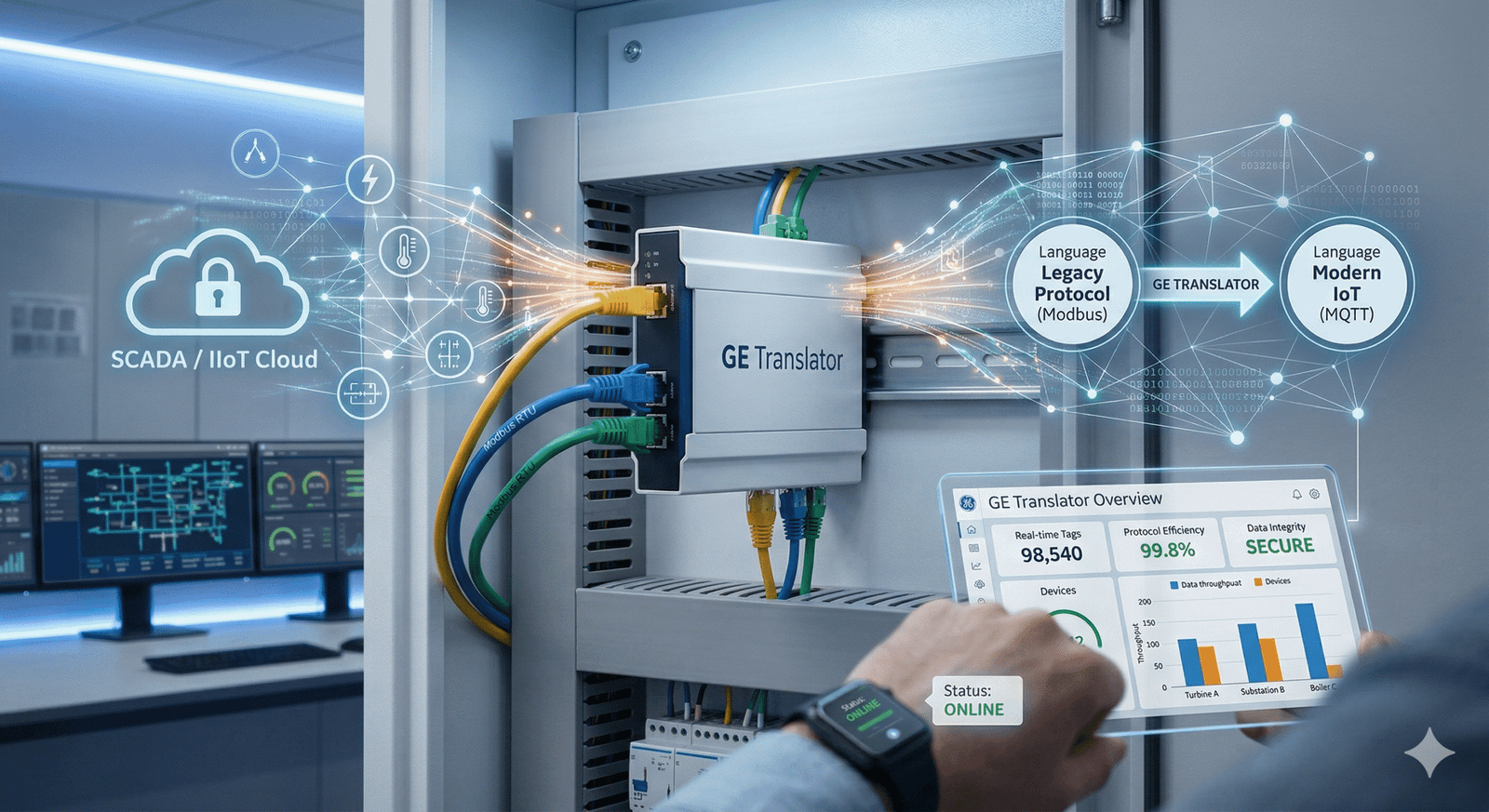
In the rapidly evolving landscape of industrial automation and smart manufacturing, the ability to bridge the gap between different data protocols and languages is paramount. The GE Translator stands at the intersection of this technological necessity, serving as a critical bridge for engineers and facility managers worldwide. As industries transition toward Industry 4.0, the “language” of machines ranging from Modbus and BACnet to complex proprietary GE Vernova strings requires a sophisticated interpreter to ensure seamless operations.
This guide provides a deep dive into the GE Translator ecosystem, exploring how it facilitates real-time data conversion, enhances HMI/SCADA workflows, and supports global localization efforts. Whether you are looking to integrate legacy hardware with modern cloud platforms or need to localize technical interfaces for a global workforce, understanding the nuances of this tool is essential. We will uncover the technical specifications, practical use cases, and strategic benefits that make this utility a cornerstone of modern industrial IT infrastructure. By the end of this article, you will have a comprehensive roadmap for leveraging translation technologies to boost your operational efficiency and data integrity.
Defining the GE Translator in Modern Tech
The term GE Translator often refers to a suite of software utilities and protocols designed by GE (now GE Vernova and GE Digital) to convert data formats or user interfaces into accessible, actionable information. In the tech niche, it serves two primary roles: translating machine protocols for grid stability and localizing software for international operators.
- Protocol Conversion: Transforming legacy device data into modern IoT formats.
- Interface Localization: Adapting HMI (Human-Machine Interface) text for global markets.
- Data Normalization: Ensuring consistency across disparate energy data sources.
The Role of GE Translator in Industrial Automation
In a factory or power plant, various machines often speak different “languages.” The GE Translator acts as a linguistic mediator, allowing a GE turbine to communicate with a third-party control system without data loss.
- Interoperability: Bridges the gap between GE’s Multilin devices and non-GE systems.
- Legacy Support: Allows older “serial-based” hardware to talk to modern Ethernet networks.
- Signal Mapping: Maps internal register addresses to user-friendly tags.
Key Features of the GE Translator Utility
Efficiency in the field depends on the robustness of your tools. The GE Translator is built with specific features that cater to the high-stakes environment of electrical engineering and automation.
- Auto-Discovery: Automatically identifies connected devices and their native protocols.
- Bulk Conversion: Handles thousands of data points simultaneously to save engineering time.
- Error Logging: Provides a detailed audit trail of any translation failures.
- Custom Mapping: Users can define specific rules for how data should be interpreted.
How GE Translator Enhances GridOS Data Fabric
As part of the GridOS ecosystem, the GE Translator functionality is embedded within the data fabric layer. It helps utilities manage the massive influx of “big data” coming from the edge of the grid.
- Contextualization: It doesn’t just translate numbers; it adds context (e.g., “Volts” vs “Amps”).
- Federation: Connects data silos across transmission and distribution networks.
- Virtualization: Allows users to view translated data without moving it from the source.
Technical Specifications and Compatibility
Before deploying a GE Translator solution, understanding the hardware and software requirements is vital for system stability and long-term performance.
| Feature | Specification |
| Supported Protocols | Modbus RTU/TCP, DNP3, IEC 61850, OPC UA |
| Operating Systems | Windows Server 2022, Linux (Ubuntu/RHEL) |
| Hardware Integration | GE Multilin, UR Series, GridBeats™ |
| Max Tags | Up to 100,000+ points per instance |
Real-World Case Study: Smart Grid Integration
A major European utility recently implemented GE Translator logic to unify their aging substation data with a new AI-driven monitoring platform. The results were transformative for their maintenance schedule.
- The Challenge: 40% of their equipment used legacy protocols incompatible with the cloud.
- The Solution: Deployed translator gateways to normalize data into JSON/MQTT formats.
- The Result: A 25% reduction in unplanned downtime due to better predictive analytics.
Optimizing HMI with GE Translator for Global Teams
Localization is a key part of the GE Translator workflow for multinational corporations. It ensures that an operator in Tokyo sees the same critical alerts as one in Chicago, but in their native language.
- Dynamic Language Switching: HMIs can change languages on the fly based on user login.
- Unicode Support: Ensures special characters and scripts (like Kanji or Cyrillic) render correctly.
- Contextual Accuracy: Translates technical jargon specifically for the energy sector.
Improving Workflow Efficiency with GE Digital
By using the GE Translator within GE Digital’s Workflow software, companies can digitize manual processes. This reduces the “human error” factor often found in manual data entry.
- Step-by-Step Guidance: Translates complex procedures into simple instructions.
- Automated Alarms: Converts raw machine alarms into plain-English “Corrective Actions.”
- Knowledge Transfer: Captures the expertise of retiring engineers into a digital, translated format.
Security Protocols for Data Translation
Translating data opens up potential vulnerabilities if not handled correctly. The GE Translator employs enterprise-grade security to protect sensitive industrial information.
- Encryption: Uses TLS 1.3 for all data in transit during the translation process.
- Role-Based Access: Only authorized personnel can modify translation maps.
- Audit Trails: Every change to the translation logic is recorded for compliance.
Installation and Configuration Best Practices
Setting up the GE Translator requires a methodical approach to ensure that data integrity is maintained throughout the system lifecycle.
- Pre-Installation Audit: Verify all source device register maps before starting.
- Pilot Phase: Test the translation on a small group of non-critical tags first.
- Redundancy: Always configure a backup translator instance for high-availability systems.
Troubleshooting Common Translation Errors
Even the best tools encounter hiccups. Knowing how to quickly diagnose issues with your GE Translator setup can save hours of frustration.
- Timeout Errors: Usually caused by network latency between the source and the translator.
- Mapping Mismatches: Occur when the data type (e.g., Integer vs Float) is defined incorrectly.
- Buffer Overflows: Happens when the volume of data exceeds the allocated processing power.
Comparison: GE Translator vs. Standard CAT Tools
It is important to distinguish between industrial translators and standard Computer-Assisted Translation (CAT) software used for general documents.
| Aspect | GE Translator (Industrial) | Standard CAT Tools |
| Primary Goal | Machine Data Interoperability | Human Language Translation |
| Input Format | Binary, Hex, Register Maps | Word, PDF, HTML |
| Real-time Need | Sub-millisecond latency | Non-real-time |
| Expertise | Electrical/Automation Engineering | Linguistics/Localization |
The Future of AI in GE Translation Technology
The next generation of the GE Translator will likely incorporate Large Language Models (LLMs) and Machine Learning to automate the mapping process.
- Neural Translation: More accurate localization of technical manuals.
- Self-Healing Maps: AI that detects when a device has changed its data format and adapts.
- Voice Integration: Allowing operators to “talk” to their SCADA systems in any language.
Cost-Benefit Analysis for Small Enterprises
While large utilities see obvious benefits, smaller manufacturing plants must weigh the ROI of implementing a dedicated GE Translator solution.
- Initial Cost: Software licensing and hardware gateway expenses.
- Labor Savings: Massive reduction in manual data “massaging” and spreadsheet work.
- Scalability: Allows the plant to grow by adding new, diverse machines easily.
Strategic Implementation and Final Roadmap
Selecting the right GE Translator strategy is about more than just moving data; it’s about unlocking the potential of your entire industrial ecosystem. By ensuring that every piece of hardware and every human operator can communicate effectively, you create a foundation for a truly “smart” enterprise.
FAQs
How do I update the GE Translator maps?
Most maps can be updated via the EnerVista Launchpad or the specific HMI configuration tool. Simply import the new CSV or XML register definitions and deploy the changes to the live system during a scheduled maintenance window.
Is the GE Translator compatible with Linux?
Yes, many modern versions of the translator services, especially those built for GridOS and Edge computing, are designed to run on containerized Linux environments like Docker.
Can I use GE Translator for non-GE equipment?
Absolutely. One of the primary functions of the GE Translator is to allow GE systems to ingest data from third-party vendors using standard protocols like Modbus or OPC UA.
Does it support real-time data streaming?
Yes, it is designed for high-speed industrial environments where sub-second data updates are required for protection and control functions.
How does it handle special technical characters?
The software utilizes UTF-8 and Unicode standards, ensuring that technical symbols (like 180°C or $\Omega$ for Ohms) are translated and displayed correctly across all interfaces.
What is the difference between a translator and a gateway?
A gateway is the physical hardware, while the GE Translator is the software logic running on that hardware that performs the actual data conversion.
Is training required to use the software?
While the basic interface is user-friendly, GE Vernova offers specialized certification for engineers who need to manage complex, grid-scale translation architectures.
Conclusion
The journey toward a fully connected, multilingual industrial environment is ongoing. The GE Translator remains a pivotal tool in this transition, offering the reliability of a legacy brand with the innovation of modern software engineering. As you look to optimize your facility, remember that the quality of your data is only as good as the “translator” that brings it to life. We encourage you to explore the latest updates from GE Vernova to see how these tools can be tailored to your specific operational needs. Consistent data leads to consistent results don’t let a language barrier between your machines hold your business back.