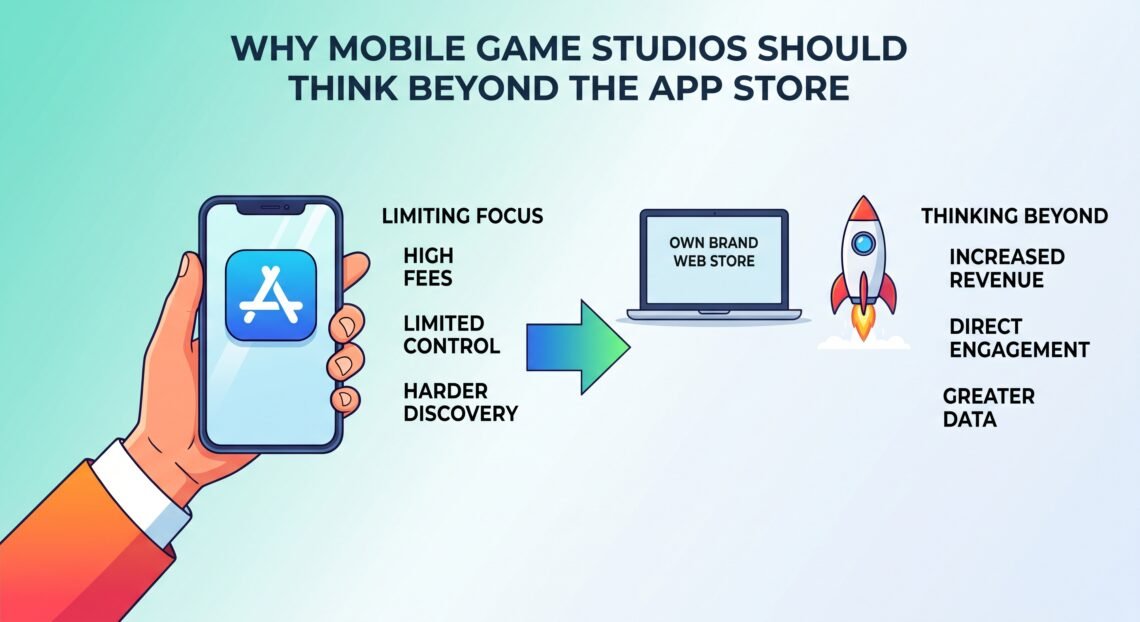
A polished mobile game can still struggle to find players. App-store rankings matter, but they are only one part of how people discover games. Players also search the web for new releases, walkthroughs, device compatibility, and recommendations. For small studios and app publishers, making a game visible across both channels can be an important part of launch planning.
That does not mean web search can replace app-store optimisation. The two work differently: app-store listings influence discovery inside a store, while a website can answer broader questions and attract people who have not yet decided what to download. A useful web presence might include a clear game page, screenshots, system requirements, update notes, and articles that address the kinds of searches potential players actually make.
Build a discovery path around the game
Start with the information a player needs before installing. Explain the game’s genre and core loop in plain language, name supported platforms, and make the age rating and monetisation model easy to find. A page that simply repeats a promotional tagline gives search engines and visitors little context. A page that explains whether a game is a turn-based strategy title, an offline puzzle game, or a multiplayer racer can be more useful to both.
Content can extend that foundation. A strategy game might benefit from beginner guides, while a rhythm game could publish controller or audio setup advice. These pages should solve real problems rather than exist only to target search phrases. Helpful material can bring in visitors over time and give them a reason to explore the game’s official page.
Technical details matter too. Mobile visitors may be on a slow connection or an older device, so pages should load quickly, work well on narrow screens, and keep essential information easy to reach. Compressed images, readable text, sensible navigation, and accessible controls improve the experience for people as well as search performance. For a studio already optimising a game, maintaining another digital product can be a substantial workload.
When outside SEO support makes sense
Some teams have the skills to handle research, writing, and technical improvements internally. Others need help for a specific launch or lack a dedicated search specialist. In that situation, an agency may provide services such as keyword research, content planning, or link building while the studio focuses on development and community management.
Agencies sometimes use white-label SEO to deliver work completed by an outside provider under the agency’s own brand. This can let a small agency add capacity without hiring for every specialism. It can also create distance between the client and the people doing the work, so responsibilities and quality checks should be clear from the outset.
Before agreeing to a package, ask what will actually be delivered. “SEO” might mean a technical audit, a content brief, published articles, outreach, or links from other sites; those are distinct tasks with different risks and timelines. Agree on who approves content, who owns the accounts and finished materials, how progress will be reported, and what happens if a placement or deliverable falls through.
Choose a working model that fits the project
A managed provider can be useful when a team wants one point of contact and a coordinated plan. The trade-off is that the service may bundle work, making it harder to see the cost of each component. A self-serve marketplace can offer more control over selecting individual workers and tasks, but the buyer must spend time comparing profiles, defining requirements, and checking results.
Marketplaces cover far more than search marketing. For example, Osdire connects buyers with freelancers across categories such as programming, design, writing, video, audio, photography, and marketing. That range may be relevant to a mobile project that needs several separate skills, such as landing-page copy, promotional artwork, and a technical fix. Its flat pricing and payment held until an order is approved are details buyers can consider when deciding whether the platform’s process fits their needs.
Regardless of the route, evaluate a provider by the work and communication, not by a guarantee of rankings. Search results change, and no supplier can control every factor. Review relevant examples, ask how they approach a game or app audience, and request a small, clearly scoped first task if you are uncertain. For link building, find out how sites are selected and avoid plans that promise large quantities of links without explaining their relevance or quality.
Measure what helps players find and enjoy the game
Set a baseline before work begins. Track search impressions and clicks for useful pages, but also examine what happens afterward: do visitors reach the download page, read a guide, or return? If analytics show plenty of visits but few people taking the next step, the issue may be unclear messaging, a slow page, or a mismatch between the search and the content.
Give changes time to produce evidence, and avoid judging a campaign by a single ranking snapshot. Search visibility is one input in a broader launch strategy alongside store-page quality, reviews, social channels, and community activity. A practical plan is to improve the game’s information first, add genuinely useful resources, and bring in outside help only where a specific skill or capacity is missing. That keeps discovery work connected to the actual player experience rather than turning it into a checklist of disconnected SEO tasks.