Introduction
In an era where data is the new oil, personal privacy has become the most coveted luxury. Every click, download, and file upload leaves a digital footprint that tech giants, advertisers, and malicious actors are eager to exploit. With data breaches affecting over 60% of small businesses and millions of individuals annually, the demand for truly private, secure storage solutions has never been higher. Enter AnonVault, a cutting-edge platform designed to reclaim your digital sovereignty.
AnonVault is not just another cloud storage provider; it is a fortress for your digital assets. unlike mainstream services that require invasive personal details, AnonVault prioritizes anonymity, operating on a “Zero-Knowledge” architecture that ensures even the service provider cannot access your files. Whether you are a journalist protecting sensitive sources, a cryptocurrency enthusiast securing private keys, or simply a privacy-conscious individual, this guide will explore how AnonVault is redefining data security. We will dive deep into its encryption standards, compare it with industry giants, and show you why “anonymous” is the future of the internet.
What Is AnonVault?
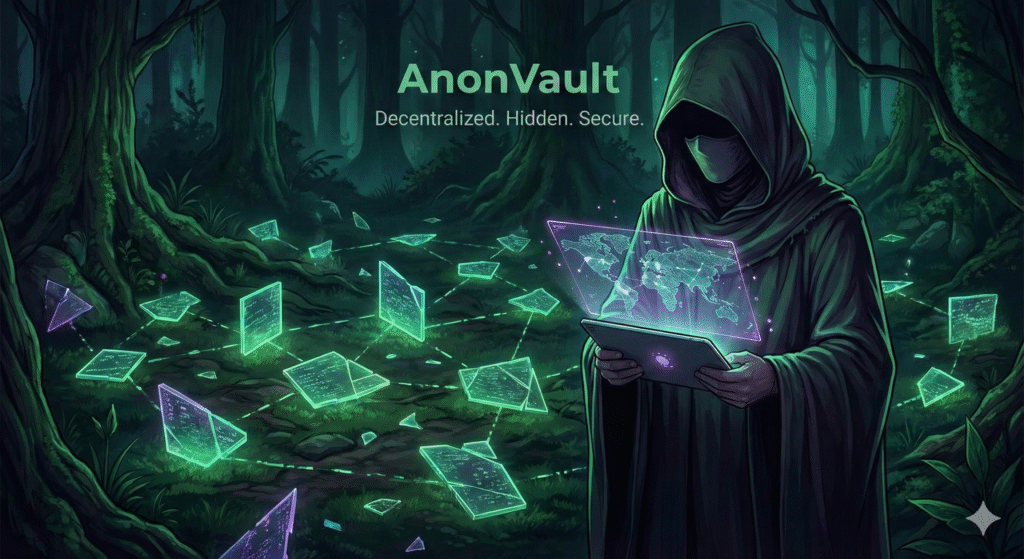
AnonVault is a decentralized, secure digital storage solution designed specifically for users who demand high levels of privacy and anonymity. At its core, it functions as a digital safe deposit box where you can store documents, media, and sensitive information without linking them to your real-world identity.
Unlike traditional cloud services like Google Drive or Dropbox, which scan your data for advertising or service improvement purposes, AnonVault is built on the philosophy of absolute privacy. It combines advanced cryptographic techniques with a user-friendly interface, ensuring that security does not come at the expense of usability.
- Core Promise: Complete anonymity with no personal data collection.
- Target Audience: Whistleblowers, legal professionals, crypto users, and privacy advocates.
The Technology: End-to-End Encryption Explained
The backbone of AnonVault’s security is End-to-End Encryption (E2EE). This ensures that your files are encrypted on your device before they are ever transmitted to the cloud.
When you upload a file to AnonVault, it is locked with a cryptographic key that only you possess. This creates a secure tunnel where data is unreadable to hackers, internet service providers (ISPs), and even AnonVault’s own administrators.
- Standard Used: Typically utilizes AES-256 bit encryption, the industry gold standard.
- Transit Security: Protects data against “Man-in-the-Middle” attacks during upload and download.
Zero-Knowledge Architecture: Your Keys, Your Data
One of the most critical features of AnonVault is its Zero-Knowledge Architecture. In layman’s terms, this means the service provider has zero knowledge of what you store or your password.
If the government or a hacker were to subpoena or breach AnonVault’s servers, all they would find is gibberish code. Because AnonVault does not store your decryption keys, they cannot unlock your account even if compelled by law. This places the ultimate responsibility and power in the hands of the user.
No-KYC Policy: True Anonymity
Most digital services require “Know Your Customer” (KYC) verification, demanding your name, phone number, and sometimes government ID. AnonVault disrupts this model with a strict No-KYC policy.
- Sign-Up Process: Often requires nothing more than a generated username or a crypto wallet address.
- Payment Methods: Accepts cryptocurrencies (Bitcoin, Monero) to prevent financial tracking.
- Benefit: Eliminates the risk of identity theft via third-party database leaks.
Decentralized Storage and Blockchain Integration
AnonVault leverages decentralized storage technology, often integrated with blockchain networks. Instead of storing your files on a single central server (which creates a single point of failure), your data is sharded split into tiny pieces and distributed across a global network of nodes.
This method offers robust protection against:
- Server Outages: If one node goes down, others reconstruct your data.
- Censorship: No central authority can easily delete or block access to your files.
- Data Corruption: Blockchain hashes verify file integrity automatically.
AnonVault vs. Traditional Cloud Storage
To truly understand the value proposition of AnonVault, we must compare it to the giants we use daily.
Table 1: Feature Comparison
| Feature | AnonVault | Google Drive / Dropbox |
| Privacy Model | Zero-Knowledge (Private) | Data Accessible by Provider |
| Encryption | Client-side (On device) | Server-side (In transit/rest) |
| Anonymity | High (No personal info) | Low (Linked to real ID) |
| File Scans | None | Scans for content/copyright |
| Jurisdiction | Privacy-friendly regions | USA (Subject to PRISM/Patriot Act) |
| Recovery | Recovery Key only | Email/SMS recovery |
Secure File Sharing Capabilities
Privacy doesn’t mean isolation. AnonVault offers sophisticated secure file sharing features that allow you to collaborate without compromising security.
- Self-Destructing Links: Create shareable links that expire after a set time or a specific number of downloads.
- Password Protection: Add an extra layer of security to shared files.
- Anonymized Metadata: Strips identifying information (like location or device type) from shared files.
Protection Against Ransomware and Malware
With ransomware attacks on the rise, AnonVault serves as a critical backup solution. By keeping an “air-gapped” or isolated copy of your data in an encrypted vault, you ensure business continuity even if your local devices are compromised.
The immutable nature of blockchain-based storage means that once a file version is written, it cannot be altered or encrypted by malicious software entering your network.
Who Should Use AnonVault?
While everyone benefits from privacy, certain groups find AnonVault indispensable:
- Journalists & Activists: Protecting sources and sensitive research from state surveillance.
- Legal & Medical Professionals: Storing client privilege data or patient records (HIPAA compliance) securely.
- Cryptocurrency Holders: Storing seed phrases and private keys in a digital environment safer than a standard hard drive.
- IP Creators: Protecting pre-release content, manuscripts, and designs from leaks.
User Interface and Usability
A common myth is that secure tools are difficult to use. AnonVault challenges this by offering a sleek, intuitive User Interface (UI).
- Drag-and-Drop: Easily upload files from your desktop.
- Cross-Platform Support: Accessible via web browsers, iOS, and Android apps.
- Dashboard: a clean overview of storage usage and active shared links.
Pricing Models and Accessibility
AnonVault typically operates on a “Freemium” model, making privacy accessible to all.
- Free Tier: Limited storage (e.g., 5GB-10GB) with standard encryption.
- Premium Tier: Paid via crypto, offering massive storage (1TB+), faster speeds, and priority support.
- Lifetime Plans: Some decentralized options offer one-time payments for permanent storage space.
Setting Up Your Account Securely
Getting started is designed to be frictionless but requires careful attention to security protocols.
- Generate a Strong Master Password: This is your only key. If you lose it, you lose your data.
- Save Your Recovery Seed: A string of random words used to recover the account if the password is lost.
- Enable 2FA: Use a hardware key (YubiKey) or an authenticator app, never SMS.
Security Audits and Trustworthiness
Trust is earned through verification. Leading anonymity tools undergo regular third-party security audits. While AnonVault’s code is often open-source, allowing the community to inspect it for backdoors, formal audits by firms like Cure53 or Trail of Bits add a layer of credibility. Always check for the latest audit report on their website before committing sensitive data.
Potential Limitations
No system is perfect. Users should be aware of:
- No Password Reset: The Zero-Knowledge model means “Forgot Password” buttons don’t exist.
- Speed: Decentralized networks can sometimes be slower than centralized servers like AWS.
- Collaboration: Real-time document editing (like Google Docs) is harder to implement with heavy encryption.
The Future of Digital Privacy
As Artificial Intelligence and surveillance capitalism grow, tools like AnonVault will transition from niche products to essential utilities. We are moving toward a “Web3” future where users own their data rather than renting it from tech monopolies. AnonVault represents the first step in this shift, offering a sanctuary where digital rights are respected by design.
Conclusion
In a digital landscape riddled with surveillance and insecurity, AnonVault stands as a beacon of privacy. It offers a robust, user-friendly solution for anyone looking to divorce their digital identity from their personal data. By combining military-grade encryption with a strict no-logs policy, it provides peace of mind that is increasingly rare in the 21st century.
Whether you are protecting corporate trade secrets or just personal family photos, the move to anonymous, encrypted storage is a proactive step toward digital safety. Don’t wait for a data breach to take your privacy seriously secure your digital life with AnonVault today.
FAQs
What happens if I forget my AnonVault master password?
Because of the Zero-Knowledge architecture, AnonVault cannot reset your password. If you lose your master password and your recovery seed phrase, your data is permanently inaccessible. This is a security feature, not a bug.
Is AnonVault free to use?
Yes, AnonVault typically offers a free tier with limited storage capacity. For advanced features and higher storage limits, premium plans are available, often payable in cryptocurrency.
Can I access AnonVault on my mobile device?
Yes, AnonVault offers cross-platform compatibility with dedicated apps for both Android and iOS, as well as a responsive web interface for mobile browsers.
How does AnonVault protect against government subpoenas?
Since AnonVault does not hold the encryption keys to your data, they cannot decrypt your files even if forced by a court order. Additionally, because they collect no personal KYC data, they often have no identifying information to hand over.
Is AnonVault slower than Google Drive?
Encryption and decryption processes happen on your device, which can take a few extra seconds. Additionally, decentralized storage networks can sometimes have slightly higher latency than centralized servers, but the difference is usually negligible for standard use.
Does AnonVault support two-factor authentication (2FA)?
Yes, AnonVault supports robust 2FA methods. It is highly recommended to use an authenticator app or hardware key rather than SMS 2FA to maintain anonymity and security.
Can I share files with people who don’t use AnonVault?
Yes, you can generate secure, self-destructing links to share files with non-users. They can download the file using the link and a password (if you set one) without needing to create an account.