
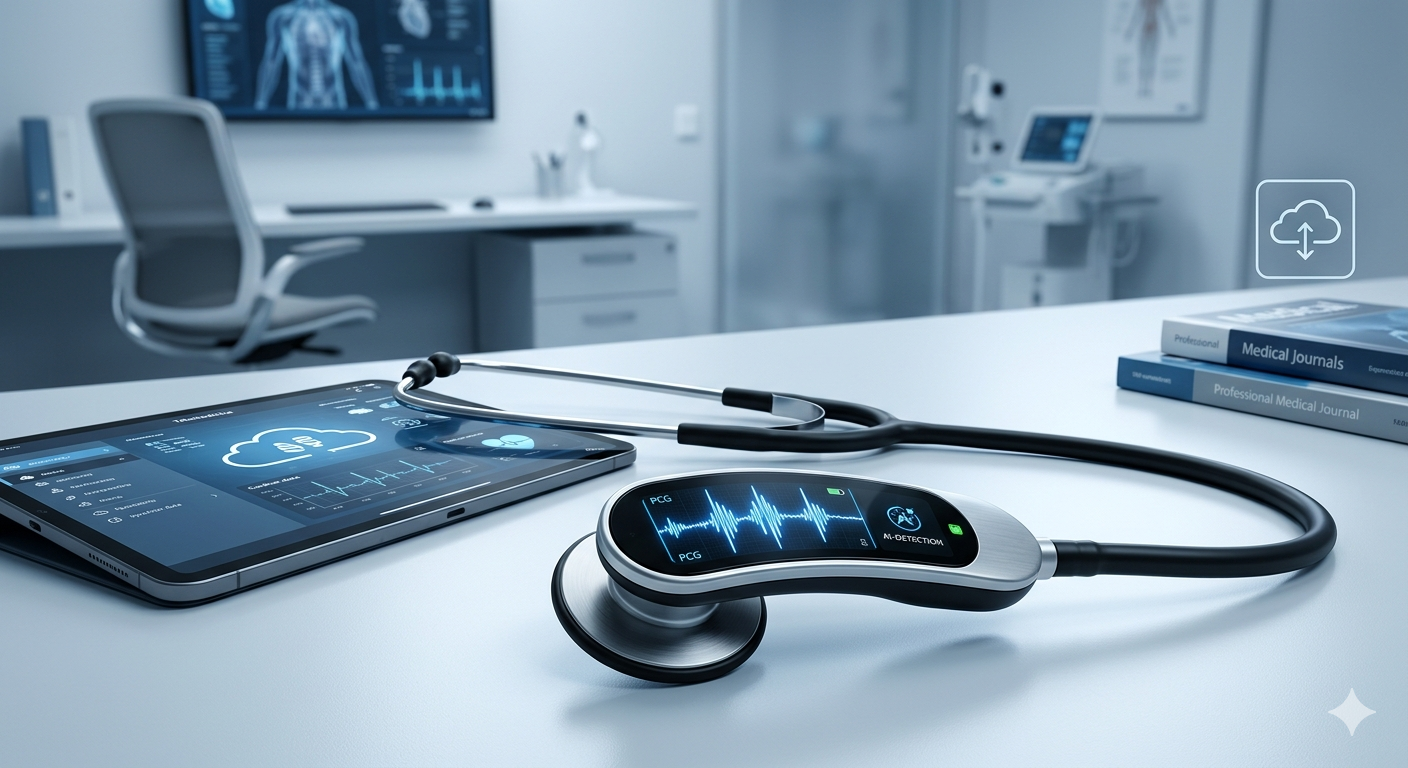
Auscultation, the practice of listening to the internal sounds of the human body, has been a cornerstone of clinical medicine for over two centuries. For generations, the traditional acoustic stethoscope hung around a clinician’s neck served as an enduring symbol of the medical profession. However, the analog era of medicine is giving way to a highly interconnected, digital landscape. Today, the classic stethoscope is undergoing a profound technological transformation, driven by breakthroughs in acoustic engineering, signal processing, and artificial intelligence (AI).
In modern clinical environments, these advanced diagnostic instruments frequently referred to in professional European markets by their Italian designation, fonendi are evolving into sophisticated data-acquisition hubs. By transforming mechanical acoustic vibrations into high-fidelity digital streams, modern fonendi bridge the gap between traditional bedside physical examinations and data-driven healthcare technology.
This comprehensive technical analysis explores the evolution, engineering principles, architectural integration, and clinical impact of modern digital fonendi. Whether you are a healthcare technology specialist, an embedded systems engineer, or a clinician looking to modernize your practice, this article provides an authoritative roadmap to the contemporary landscape of digital auscultation.
Evolution of the Fonendi: From Acoustic Tubes to Digital Sensors
The journey of the stethoscope from a basic wooden cylinder to a highly advanced sensor platform highlights a continuous effort to eliminate human diagnostic bias. Acoustic instruments often struggle with structural limitations, including ambient sound interference and natural human hearing thresholds.
- Acoustic Signal Attenuation: Traditional stethoscopes rely entirely on the physical conduction of sound waves through rubber tubing, which inherently dampens high-frequency murmurs and faint low-frequency gallops.
- Electronic Transduction: Modern digital instruments replace or augment the traditional physical diaphragm with piezoelectric sensors or specialized micro-electret microphones.
- Objective Visual Diagnostics: Converting raw mechanical sound into dynamic digital audio files lets practitioners visualize sound waves as phonocardiograms (PCGs), removing subjective guesswork from patient assessments.
Core Hardware Architecture of a Modern Electronic Fonendoscopio
The internal circuitry of a professional digital stethoscope requires highly precise engineering to capture clear, uncorrupted clinical signals.
- Acoustic Sensor Elements: High-grade piezoelectric crystals or specialized micro-electret capsules convert physical pressure waves from body tissue into proportional electrical voltages.
- Low-Noise Pre-Amplification: Specialized pre-amplifier circuits increase subtle electrical voltages from faint body sounds while maintaining a minimal noise floor.
- Analog-to-Digital Conversion (ADC): High-resolution ADC microchips sample the amplified analog signals at uniform intervals, turning them into clean digital data streams for further processing.
- Embedded Processing Core: Ultra-low-power microcontrollers clean the data in real time, handling active filtering, ambient noise cancellation, and data transmission over secure channels.
Signal Processing and Active Noise Cancellation (ANC) Technologies
A primary technical challenge in clinical auscultation is isolating subtle physiological sounds from ambient clinic environments, patient movement, and friction against the skin.
- Ambient Noise Cancellation: Dual-microphone architectures capture environmental noise separately, subtracting it from the primary audio stream to leave only pure physiological sounds.
- Digital Frequency Filtering: Embedded DSP (Digital Signal Processing) chips allow users to switch instantly between targeted frequency ranges, isolating low-pitched heart sounds or high-pitched lung crackles.
- Artifact Suppression Algorithms: Specialized software filters out non-diagnostic transient noises, such as accidental tubing bumps or patient shivering, preventing visual or auditory distortion.
Artificial Intelligence and Machine Learning Integration
The integration of artificial intelligence (AI) has shifted the modern fonendi from a passive listening tool into an active diagnostic assistant.
- Automated Feature Extraction: Machine learning pipelines analyze complex audio data using Mel-Frequency Cepstral Coefficients (MFCCs) to identify diagnostic patterns hidden within clinical audio.
- Deep Learning Classification: Convolutional Neural Networks (CNNs) and Recurrent Neural Networks (RNNs) classify irregular cardiac and pulmonary sounds with high precision.
- Objective Diagnostic Support: AI tools offer reproducible clinical classification, assisting healthcare teams by flagging potential structural abnormalities for further verification.
Comparative Analysis: Traditional Acoustic vs. Digital Fonendi
Choosing between traditional acoustic models and advanced digital systems depends on balancing classic tactile reliability against modern data-driven features.
| Functional Feature | Traditional Acoustic Instruments | Advanced Digital Fonendi |
| Signal Amplification | Baseline acoustic conduction (0 dB amplification) | Adjustable electronic amplification up to 40x+ |
| Environmental Noise Isolation | Passive physical isolation via ear-tip seal | Active Electronic Noise Cancellation (ANC) |
| Data Capture & Storage | Transient auditory experience; no data retention | Local and cloud-based digital audio recording |
| Diagnostic Support | Relies entirely on clinician hearing and experience | AI-driven murmur and crackle detection algorithms |
| Telemedicine Suitability | Not viable for remote asynchronous review | Native live streaming and digital file sharing |
Cloud Connectivity and Telemedicine Infrastructure
Modern healthcare IT networks require medical devices to securely stream real-time data across decentralized clinical settings.
- Secure Wireless Protocols: Integrated low-energy wireless chipsets sync recorded audio directly to authenticated clinical software platforms.
- Asynchronous Diagnostics (Store-and-Forward): Clinicians record high-fidelity audio files, attach them to the patient’s electronic health record, and share them securely for expert review.
- Live Waveform Streaming: Real-time audio and digital visual waveforms stream directly to remote specialists during active telemedicine consultations.
Cardiovascular Diagnostics: Enhancing Murmur Detection
Analog cardiac auscultation has notable limitations, with studies showing an average sensitivity of roughly 44% for identifying significant valvular heart disease (VHD) during routine primary care screenings (Rancier, 2026).
- Valvular Defect Screening: AI-guided digital instruments achieve higher sensitivity—reaching up to 92.3% in clinical assessments—when screening for moderate-to-severe valvular heart disease (Rancier, 2026).
- Phonocardiography (PCG) Visualization: Converting auditory data into visual wave charts helps clinicians pinpoint the exact timing of structural anomalies within the cardiac cycle.
- Early Preventive Referrals: Objective acoustic data helps care teams identify asymptomatic structural heart conditions earlier, optimizing patient referral workflows.
Pulmonary Auscultation: Mapping Respiratory Pathologies
Isolating subtle respiratory sounds requires high acoustic clarity across a wide range of frequencies.
- Isolating Pathological Breath Sounds: Deep learning models trained on large clinical datasets classify specific wheezes, stridor, and crackles with greater consistency than manual listening alone (Grzywalski et al., 2019).
- Chronic Disease Monitoring: Objective audio logs allow care teams to track the progression of long-term conditions like COPD and asthma over time.
- Multi-Site Sound Mapping: Digital software can sync and visualize recordings from multiple areas of the lungs, providing a more comprehensive view of respiratory health.
Pediatric Care Applications and Acoustic Optimization
Examining pediatric patients requires highly sensitive acoustic tools capable of capturing rapid heart rates and faint breath sounds.
- Navigating High Heart Rates: Digital sound filters help clarify structural sounds at fast heart rates, making it easier to distinguish benign murmurs from pathological ones.
- Reducing Patient Anxiety: Non-invasive digital sensors allow for faster examinations, minimizing stress for pediatric patients.
- Reassuring Families: Sharing visual audio charts helps clinicians explain findings clearly to parents, building confidence in the care plan.
Data Security and Regulatory Compliance in Digital Auscultation
Because digital stethoscopes handle sensitive patient audio data, they must adhere to strict international privacy and healthcare security standards.
- End-to-End Encryption: Auditory data must be fully encrypted both during wireless transmission and while stored in cloud databases.
- Healthcare Compliance Standards: Systems must align with regional privacy frameworks, including HIPAA in the United States and GDPR in the European Union.
- Medical Software Validation: AI diagnostic features require formal regulatory clearance, such as FDA approval or CE marking, to verify their clinical accuracy.
Low-Cost AI Innovations for Resource-Limited Settings
Emerging engineering research focuses on making advanced digital auscultation tools accessible to underserved communities and developing regions.
- Affordable Hardware Design: Open-source architectures demonstrate that effective digital sound collection can be achieved using low-cost components and compact microcomputers (Zhang et al., 2023).
- Lightweight Edge Computing: Optimizing deep learning models lets complex analytical software run locally on entry-level hardware without needing an internet connection (Ghouse et al., 2025; Zhang et al., 2023).
- Expanding Healthcare Access: Affordable, intelligent diagnostic tools help bring reliable cardiac and respiratory screenings to rural clinics worldwide.
Clinical Workflow Optimization and EHR Integration
To be truly effective, modern digital devices must integrate smoothly into the daily routines of busy healthcare teams.
- Automated EHR Documentation: Secure software links digital audio recordings directly to the patient’s centralized electronic health record.
- Reducing Diagnostic Variability: Objective data collection ensures consistent assessments across different shifts and care providers.
- Streamlining Consultations: Clear visual charts and recordings simplify the process of sharing case details with specialized consultants.
Power Management and Energy Efficiency in Smart Medical Devices
Reliable power management is essential for portable medical equipment used throughout long clinical shifts.
- Optimizing Low-Power States: Embedded power management systems automatically transition devices into deep sleep modes during periods of inactivity.
- High-Density Battery Technology: Modern rechargeable lithium polymer cells provide continuous operation across multiple consecutive shifts.
- Efficient Wireless Transmission: Data transmission protocols are engineered to send large audio files quickly, minimizing power consumption.
Ergonomics, Material Science, and Durability
The physical design of a digital stethoscope must balance delicate internal electronics with the rugged demands of daily clinical use.
- Disinfection and Hygiene: External housings are built from high-grade, chemical-resistant polymers designed to withstand frequent sanitization.
- Shock and Impact Resistance: Internal circuit boards are mounted with protective dampening to safeguard sensitive acoustic elements from accidental drops.
- Tactile Design: Well-balanced chestpieces ensure steady skin contact, minimizing handling noise and hand fatigue during examinations.
The Role of Digital Auscultation in Infectious Disease Management
Wireless auscultation systems have proven valuable in maintaining safety protocols when treating transmissible respiratory conditions.
- Isolating Transmissible Risks: Wireless data transmission allows clinicians to examine isolated patients while keeping vulnerable equipment outside the immediate contamination zone (Kim et al., 2023).
- PPE-Compatible Design: Bluetooth-enabled audio streams directly to wireless earpieces or headsets, bypassing the physical constraints of protective suits.
- Long-Term Spatial Monitoring: Wearable, continuous-monitoring sensors allow teams to track a patient’s respiratory health without requiring frequent room entries (Kim et al., 2023).
Veterinary Applications: Adapting Acoustic Technology
Digital sound processing offers unique advantages when adapting auscultation techniques for veterinary medicine.
- Filtering Dense Fur Interferences: Advanced acoustic filters suppress the friction sounds caused by animal fur, isolating the underlying body sounds.
- Managing Wide Heart Rate Ranges: Scalable frequency settings capture everything from the slow heart rates of large animals to the rapid rhythms of small exotic pets.
- Stress-Free Inspections: Wireless sound capture allows vets to observe animals from a comfortable distance, reducing patient anxiety during checkups.
Training the Next Generation: Digital Auscultation in Education
Digital tools are reshaping medical education by turning an individual listening experience into an interactive classroom resource.
- Shared Group Listening: Multiple students can listen to a single live patient audio stream simultaneously using paired wireless headsets.
- Visual Training Tools: Correlating live sounds with real-time on-screen wave charts helps students learn to recognize complex acoustic patterns faster.
- Standardized Case Libraries: Access to curated databases of confirmed pathological recordings provides students with consistent, high-quality reference material.
Future Horizon: Next-Generation Diagnostics
The next phase of innovation points toward multi-sensor systems that combine acoustic data with other physiological metrics.
- Integrated Multi-Sensor Chestpieces: Future designs aim to combine acoustic sensors with single-lead ECG electrodes to capture electrical and structural heart data at the same time (Andres, 2025).
- Predictive Health Analytics: Advanced cloud analytics will evaluate subtle sound trends over time to flag early signs of heart or lung complications before symptoms appear.
- Miniaturized Wearable Sensors: Lightweight patch-style stethoscopes will allow for continuous, unobtrusive monitoring of high-risk patients at home.
Clinical Validation and Diagnostic Efficacy Data
To evaluate how digital integration impacts diagnostic performance, the following table summarizes key performance metrics of AI-driven auscultation platforms from recent clinical studies.
| Diagnostic Focus Area | Machine Learning Model Architecture | Primary Clinical Dataset | Reported Performance Metrics | Source Study |
| Valvular Heart Disease Screening | Deep Convolutional Neural Network (CNN) | 357 Patient Prospective Primary Care Cohort | 92.3% Sensitivity, 86.9% Specificity | (Rancier, 2026) |
| Cardiopulmonary Disease Detection | Hybrid 2D CNN + Gated Recurrent Unit (GRU) | Multi-Class Public Auscultation Databases | 99.94% Diagnostic Accuracy Across 11 Classes | (Zhang et al., 2023) |
| COPD Classification & Monitoring | Specialized Artificial Neural Network (ANN) | MFCC Extracted Smartphone Auditory Dataset | 96.36% Diagnostic Accuracy | (Divakaran et al., 2025) |
FAQs
What is the primary difference between acoustic stethoscopes and digital fonendi?
Traditional acoustic stethoscopes rely entirely on physical sound tubes to channel sound waves to the ear, which can result in signal loss. Digital systems convert those physical sound waves into digital data, allowing for adjustable volume amplification, active ambient noise cancellation, visual waveform displays, and compatibility with AI diagnostic software.
How do modern digital fonendi isolate body sounds from environmental noise?
Digital stethoscopes use Active Noise Cancellation (ANC) systems, often featuring a secondary external microphone to capture ambient room noise. The internal microprocessor subtracts this environmental background noise from the primary signal collected by the chestpiece, leaving only the target heart or lung sounds.
Can an electronic stethoscope integrate directly with telemedicine software?
Yes, modern electronic stethoscopes feature built-in wireless connectivity (such as Bluetooth) to stream audio in real time to telehealth platforms or save encrypted audio files directly into a patient’s electronic health record (EHR) for later specialist review.
Are AI-enabled stethoscopes intended to replace trained medical professionals?
No, AI features are designed to serve as a supportive diagnostic tool. They help clinicians by providing objective data, reducing inter-observer variance, and flagging subtle acoustic anomalies that may warrant further diagnostic evaluation, such as an echocardiogram.
How do low-cost AI stethoscopes function without reliable internet access?
Recent developments in edge computing allow optimized, lightweight deep learning models to run directly on small embedded microcomputers within the device itself. This allows for real-time sound analysis and disease screening in remote areas without needing a cloud connection.
How are digital stethoscopes sanitized safely in clinical environments?
Professional digital stethoscopes are designed with high-density, chemical-resistant outer shells. They can be sanitized using standard clinical isopropyl alcohol wipes, provided the manufacturer’s guidelines are followed to avoid moisture entering the sensor ports or charging terminals.
Do digital stethoscopes require special software or mobile applications to operate?
While basic amplified listening functions work directly on the physical device, advanced features like visual waveform tracking, data storage, and AI analysis require connection to a compatible smartphone app or desktop software platform.
Conclusion
The evolution of traditional stethoscopes into intelligent digital fonendi represents a major step forward for modern point-of-care diagnostics. By addressing the physical limitations and subjective nature of manual auscultation, these advanced instruments turn physiological body sounds into clear, quantifiable data. As shown in recent clinical studies, the integration of signal amplification, active noise cancellation, and machine learning significantly improves screening accuracy for complex cardiac and respiratory conditions (Grzywalski et al., 2019; Rancier, 2026). Furthermore, innovations in low-cost edge computing are making these advanced diagnostic tools accessible to healthcare teams in resource-limited and remote regions worldwide (Ghouse et al., 2025; Zhang et al., 2023).
Adopting modern digital auscultation technology helps healthcare providers future-proof their practice, streamline clinical workflows, and enhance the patient experience. To explore the integration of smart diagnostic sensors further, consider reviewing recent technical standards from the international medical device community or evaluating certified digital auscultation solutions compatible with your existing telehealth infrastructure.