
The global technology landscape is shifting rapidly from pure digital software optimization toward physical, resource-smart infrastructure. As industries face unprecedented pressure to achieve decarbonization while scaling raw computational power, a massive societal and technological blueprint has emerged out of Northern Sweden: Bodenxt. This comprehensive ecosystem platform represents the intersection of emerging technologies, sustainable heavy industry, and future-ready community design. By integrating massive green hydrogen production, deep data analytics, advanced artificial intelligence, and localized energy recycling, it serves as a live, functioning laboratory for what the global tech sector must become over the next several decades.
For modern technology strategists, enterprise software developers, and clean-tech investors, understanding this specific industrial model is crucial. The framework provides actionable answers to some of our deepest systemic pain points, including the immense power requirements of modern data storage and the heavy carbon footprint of physical manufacturing. This comprehensive analysis will explore how this ecosystem scales infrastructure sustainably, provides a blueprint for next-generation algorithmic modeling, and creates a circular economy where technology and society cross-pollinate seamlessly.
Understanding the Core Architecture of Bodenxt
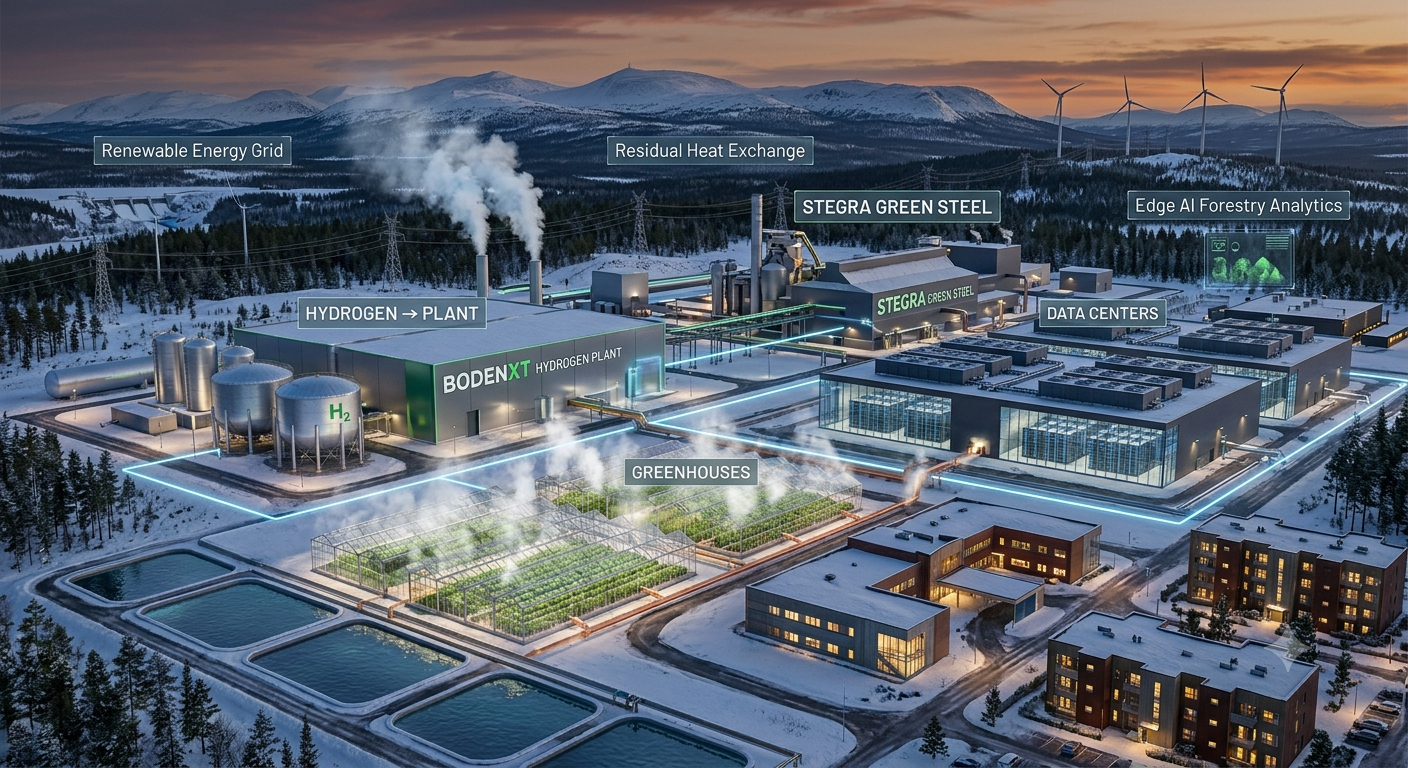
The initiative functions as an umbrella platform coordinating a multi-billion-dollar green societal transformation. At its structural foundation, the ecosystem leverages unique regional advantages specifically abundant hydro-electric power and a naturally cold climate to establish a highly resilient infrastructure for heavy computing and green manufacturing. Rather than treating individual technological sectors as isolated silos, the platform creates an integrated framework where the waste product of one system becomes the vital fuel source for another.
+-----------------------------------------------------------+
|               Bodenxt Integrated Framework               |
+-----------------------------------------------------------+
|  [Renewable Energy Input] -> Hydro & Wind Power Supply    |
|                                |                          |
|  [Primary Infrastructure] -> Europe's Largest H2 Plant   |
|                                |                          |
|  [Industrial Catalyst]    -> Stegra Green Steel Mills     |
|                                |                          |
|  [Circular Offshoot]      -> Residual Thermal Recovery   |
|                                |                          |
|  [Data Layer Integration] -> AI & Deep Forestry Analytics |
+-----------------------------------------------------------+
By anchoring its framework in regional resource availability, the platform achieves unmatched structural efficiency. The foundational design principles rely heavily on immediate scalability, absolute cloud security, and decentralized management systems that allow multiple global enterprises to operate concurrently without putting undue stress on the local municipal grid.
The Role of Stegra in Driving Green Steel Automation
A core engine within this transformation is the massive industrial presence of Stegra, formerly known as H2 Green Steel. The establishment of this cutting-edge facility serves as a vital accelerator for the entire regional ecosystem. This plant replaces traditional carbon-intensive blast furnaces with a hydrogen-powered direct reduction process, removing fossil fuels from the primary production equation entirely.
- Automation Integration: The production lines are governed by autonomous control loops and IoT sensor arrays that monitor metallurgical transitions in real-time.
- Hydrogen Utilization: The facility relies on a continuous loop of clean hydrogen gas to strip oxygen away from iron ore, venting harmless water vapor instead of greenhouse gases.
- Systemic Scale: The sheer physical footprint requires highly resilient logistical pipelines, driving massive local infrastructure investments that benefit adjacent technology sectors.
Europe’s Largest Hydrogen Plant as an Energy Foundation
To support the transition toward carbon-free heavy industry, construction is moving rapidly on Europe’s largest hydrogen production plant within the regional perimeter. This massive infrastructure asset utilizes pressurized water electrolysis powered entirely by renewable wind and hydro-electric generation to split water molecules into pure oxygen and clean hydrogen gas.
       [Renewable Electricity Source]
                     │
                     ▼
          ┌─────────────────────┐
          │ High-Power Water    │
          │  Electrolysis Tank  │
          └──────────┬──────────┘
                     │
          ┌──────────┴──────────┐
          ▼                     ▼
   [Pure Oxygen Gas]    [Clean Hydrogen Fuel]
   (Industrial Byproduct) (Directed to Stegra Mills)
The facility acts as an energy buffer for the community, storing excess electrical capacity during high-production windows in the form of compressed chemical energy. This dynamic load balancing provides structural stability to the local grid while ensuring that the downstream manufacturing components maintain a non-stop, predictable workflow.
Circular Economy Dynamics and Residual Thermal Recovery
One of the most innovative engineering feats within the ecosystem is the widespread reclamation of industrial waste heat. Traditional data centers and heavy factories release immense amounts of low-grade thermal energy directly into the atmosphere, creating systemic thermal pollution while wasting valuable power.
| Metric / Parameter | Conventional Tech Parks | The Bodenxt Standard |
| Primary Energy Utilization | Single-use throughput | Cascading multi-tier reuse |
| Data Center Byproducts | Venting to atmosphere | Directed to sub-surface heating |
| Industrial Waste Heat | 0% captured | Redirected to agriculture & civic spaces |
| Grid Interaction | Unidirectional strain | Bi-directional balancing |
This strategic infrastructure design captures thermal discharges from computing servers and hydrogen cells, routing them through localized piping systems to warm greenhouses, commercial fish farms, and community housing districts. This systematic loop reduces the overall societal carbon footprint while proving that industrial computing can actively support local agricultural and civic infrastructure.
AI-Driven Forestry Analytics and Resource Management
Beyond heavy industrial manufacturing, the platform serves as a critical incubation ground for highly specialized digital applications, particularly within the field of natural resource optimization. A prominent example is the work being done by local tech firms like Dianthus, which utilize advanced algorithmic processing to revolutionize traditional Swedish forest management.
- Multi-Source Data Fusion: The system synthesizes vast data arrays from optical camera sensors, satellite geodata, commercial laser imaging, and municipal databases.
- Machine Learning Classification: Advanced models parse these inputs to accurately identify homogenous forest patches based on tree species, precise age, and canopy density.
- Sustainable Logging Operations: The analytical output provides precise harvest strategies, minimizing the need for large-scale clear-cutting and optimizing logistical transport pathways to reduce machinery emissions.
Algorithmic Yield Optimization at the Machine Interface
The digital innovations developed within the ecosystem do not reside solely inside remote server rooms; they are deployed directly to the physical edge. Development teams are actively refining advanced artificial intelligence models designed to operate straight from the harvesters working in the field.
“By processing complex landscape variables directly at the hardware edge, harvesters can execute precise yield calculations and structural assessments in real-time, drastically reducing raw material waste.”
This edge-computing architecture ensures that industrial machinery can operate with absolute autonomy even when working in remote northern territories with limited cellular coverage. The local processing loops minimize data transmission lag, allowing for immediate adaptations to varying topographies and wood qualities.
Cross-Pollination of Diverse Technological Niches
The true long-term value of the platform lies in its deliberate status as an industrial melting pot. By bringing together traditionally disconnected sectors within a single, unified community framework, the platform fosters a highly unique environment for systemic cross-pollination.
        ┌────────────────────────────────────────┐
        │        Bodenxt Tech Melting Pot        │
        └───────────────────┬────────────────────┘
                            │
         ┌──────────────────┼──────────────────┐
         ▼                  ▼                  ▼
┌─────────────────┐┌─────────────────┐┌─────────────────┐
│ Advanced Gaming ││ Electricity-     ││ Environmental   │
│   Enterprises   ││ Intensive Sites ││  Engineering   │
└─────────────────┘└─────────────────┘└─────────────────┘
When high-performance gaming developers share infrastructure, networking pipelines, and regional proximity with power-intensive computing facilities and clean-tech startups, entirely new sub-niches emerge. This unique ecosystem allows a game physics programmer to easily collaborate with an industrial logistics engineer, accelerating breakthroughs in real-time simulation, automated supply chain modeling, and responsive power management software.
Infrastructure Scaling and Global Talent Attraction
Accommodating a rapid influx of heavy industrial infrastructure and digital technology platforms requires a parallel expansion of municipal and community frameworks. The platform actively coordinates the construction of sustainable housing, modern transport routes, and specialized educational systems designed to handle accelerated demographic growth.
- Sustainable Residential Spaces: Dozens of newly built, energy-efficient housing complexes are coming online, utilizing localized thermal heat loops for climate control.
- The International School of Boden: Serving as the region’s premier English-language educational facility, this institution ensures that arriving international engineering talent has access to world-class schooling for their families.
- Symbiotic Urban Development: Every residential expansion plan is explicitly designed to integrate with the industrial sector’s residual energy output, keeping municipal utility costs low.
Comparative Matrix Traditional vs. Green Ecosystems
To fully grasp the disruptive nature of this model, it is helpful to contrast its systemic parameters against traditional enterprise tech parks. Most modern industrial hubs rely heavily on fossil-backed power grids and isolate their operations from the local community, whereas the northern Swedish model prioritizes deep systemic integration.
| Structural Attribute | Legacy Industrial Parks | Bodenxt Circular Framework |
| Power Supply Base | Fossil-heavy or unmanaged grid mix | 100% renewable hydro & wind energy |
| Industrial Emissions | Unfiltered carbon output | Water vapor & captured oxygen gas |
| Local Community Integration | Isolated, closed-perimeter zoning | Symbiotic housing & integrated heating |
| Software/Hardware Synergy | Discrete, non-communicating entities | Edge-AI integrated with physical logistics |
This matrix highlights how the platform shifts the operational paradigm from a model of resource exploitation to one of continuous resource circulation, providing an actionable blueprint for future technology hubs worldwide.
Advanced Data Analytics and Predictive Systemic Modeling
Managing an ecosystem where energy, manufacturing, and data pipelines are deeply intertwined requires an incredibly sophisticated reporting architecture. The platform utilizes advanced data analytics tools to process billions of real-time data points flowing across the entire municipal network.
- Predictive Grid Load Balancing: Machine learning models analyze historical energy consumption trends alongside real-time weather data to forecast production drops in wind and hydro reserves.
- Dynamic Supply Chain Routing: Autonomous logistical software coordinates material movements across the Stegra mills, ensuring that incoming iron ore matching perfectly with current hydrogen production levels.
- Civic Utility Management: Flow-rate sensors throughout the seven-kilometer water transport pipelines provide immediate detection of systemic leaks, preventing resource loss before it impacts industrial operations.
Cloud Security Frameworks for Connected Heavy Industries
Because the platform integrates physical manufacturing infrastructure with cloud-connected analytics layers, maintaining an ironclad cyber security posture is paramount. A breach in a purely digital software platform is damaging, but a compromise within a green hydrogen plant or an automated steel mill could have catastrophic physical consequences.
The architecture enforces a strict zero-trust security framework across all operational technology (OT) and information technology (IT) networks. Every edge sensor, automation controller, and cloud analytics module must continually authenticate its identity before exchanging telemetry data. Advanced cryptographic tracking ensures that data streams originating from critical municipal assets such as the regional water networks or grid substations remain entirely isolated from public-facing internet protocols.
Overcoming Implementation Obstacles and the Learning Curve
Transitioning an entire regional economy toward a hyper-connected green model is not without significant practical challenges. Organizations and municipal entities entering this ecosystem frequently face a steep technological learning curve as they attempt to integrate legacy mechanical systems with modern, AI-driven software suites.
Initial implementation phases often reveal minor friction points, particularly regarding API compatibility between older industrial hardware and cutting-edge data analytics platforms. Furthermore, the specialized nature of these interconnected operations requires an aggressive workforce upskilling strategy. The community handles this challenge through direct partnerships between regional business parks, local tech firms, and academic institutions, transforming potential operational hurdles into structured training programs.
The Strategic Importance of 100% Renewable Hydropower
The entire industrial architecture would lose its systemic viability without access to a highly reliable, continuous source of green electrical energy. The northern Swedish region provides this foundation through its massive, well-established network of run-of-river hydroelectric stations.
Unlike solar or wind power, which fluctuate significantly based on short-term meteorological shifts, baseline hydropower provides an exceptionally stable, non-intermittent electrical current. This rock-solid reliability is precisely what allows heavy industrial enterprises like Stegra to maintain highly automated, non-stop chemical reduction processes without needing to rely on carbon-intensive backup generators during periods of low wind activity.
Public-Private Symbiosis as a Scalable Business Model
The rapid development seen across this northern ecosystem proves that deep environmental sustainability and corporate profitability are not mutually exclusive concepts. The platform succeeds because it operates as a true public-private partnership, where municipal authorities and global enterprise leaders share the risks and rewards of infrastructure expansion.
By offering free, confidential business development advice, accessible industrial land permits, and direct integration into the regional thermal energy network, the local municipality minimizes the initial capital friction that typically deters green-tech startups. In return, private industrial investments fund massive upgrades to the community’s water lines, transportation networks, and housing options, creating a self-sustaining cycle of economic and societal growth.
The Global Future: Replicating the Northern Swedish Model
As nations worldwide race to meet strict climate deadlines and reduce industrial carbon outputs, the structural framework pioneered by the platform offers an invaluable roadmap for international replication. The core philosophy treating industrial parks as holistic, zero-waste biological entities can be applied to any region with a high concentration of renewable energy assets.
Whether implemented in geothermal hubs across Iceland, solar-rich zones in the American Southwest, or wind-dense coastal regions along the North Sea, the principles of cascading energy utilization, edge-AI resource tracking, and public-private integration remain universally effective. The platform stands as undeniable, real-world proof that the future of technology lies in building smart, green, and deeply integrated industrial systems that can sustain prosperity for generations to come. Edge-AI Data Ingestion & Municipal API Gateway Architecture
The following architectural blueprint outlines the integration between remote, resource-constrained Edge-AI hardware arrays (such as forestry harvesters, ecological sensors, and field IoT nodes) and the centralized, public-private Municipal Data Ecosystem (power grids, dynamic utility infrastructure, and environmental databases).
High-Level Systemic Data Flow
The edge-to-municipal communication sequence relies on a unidirectional, authenticated data stream designed to preserve field power metrics while ensuring real-time structural data transmission.
+──────────────────────────┐         +──────────────────────────┐         +──────────────────────────┐
│   Edge System Layer      │         │ Transport & Sync Layer   │         │ Municipal Core Layer     │
│ ┌──────────────────────┐ │         │ ┌──────────────────────┐ │         │ ┌──────────────────────┐ │
│ │ On-Machine Inference │ │         │ │ Broker / Stream Ingest │ │         │ │ API Gateway Controller │ │
│ │ (YOLOv5/NPU Offload) │ │         │ │ (Kafka / MQTT Cluster) │ │         │ │ (Zero-Trust/OAuth 2) │ │
│ └──────────┬───────────┘ │         │ └──────────┬───────────┘ │         │ └──────────┬───────────┘ │
│            │ (JSON)      │         │            │ (Batch TLS) │         │            │ (Ingest)    │
│            ▼             │────────>│            ▼             │────────>│            ▼             │
│ ┌──────────────────────┐ │         │ ┌──────────────────────┐ │         │ ┌──────────────────────┐ │
│ │ Local Storage Shield │ │         │ │ Dynamic Rate Limiter │ │         │ │ Zone Data Reservoir │ │
│ │ (Flash / MRAM Buffer)│ │         │ │ (Burst Protection)   │ │         │ │ (Transformation/湖)   │ │
│ └──────────────────────┘ │         │ └──────────────────────┘ │         │ └──────────────────────┘ │
└──────────────────────────┘         └──────────────────────────┘         └──────────────────────────┘
API Endpoint Specifications
The following endpoints are exposed by the Municipal API Gateway to consume edge telemetry and expose processed intelligence to dependent subsystems (such as local energy recycling controls or logistical routing software).
Ingest Data Payload (Edge to Gateway)
- Endpoint:
POST /api/v1/telemetry/edge-ingest - Authentication: Bearer JWT (Issued per Edge Machine)
- Content-Type:
application/json
Request Body Structure
JSON
{
  "device_id": "EDG-SWE-BOD-4409",
  "timestamp": "2026-06-27T12:15:00Z",
  "geolocation": {
    "latitude": 65.8251,
    "longitude": 21.6883,
    "elevation_m": 122.5
  },
  "sensor_metrics": {
    "core_temperature_c": 41.2,
    "npu_utilization_pct": 74.5,
    "local_cache_usage_pct": 12.1
  },
  "inference_payload": {
    "model_version": "forestry-yolov5-v4.1.2",
    "classification_target": "homogenous_canopy_pine",
    "density_index": 0.892,
    "estimated_yield_m3": 14.25,
    "anomaly_detected": false
  }
}
Response (Success)
- Status:
202 Accepted - Body:
JSON
{
  "status": "QUEUED",
  "transaction_id": "tx_88392_edge_sync",
  "server_received_at": "2026-06-27T12:15:01Z"
}
Fetch Regional Environment Analytics (Downstream Services)
- Endpoint:
GET /api/v1/analytics/spatial-summary - Authentication: OAuth2 (Client Credentials Grant)
- Parameters:
bbox(Bounding Box coordinates:min_lat, min_lng, max_lat, max_lng),data_type
Example Call
GET /api/v1/analytics/spatial-summary?bbox=65.80,21.60,65.90,21.70&data_type=canopy_density
Response Struct
JSON
{
  "query_metadata": {
    "spatial_bounding_box": "65.80,21.60,65.90,21.70",
    "records_aggregated": 142
  },
  "environmental_insights": {
    "mean_canopy_density": 0.764,
    "projected_biomass_index": 84.32,
    "recommended_harvest_buffer_days": 14
  }
}
Core Integration Strategy
Data Refinement Zone Flow
- Transient Landing Zone: Ingests raw unstructured telemetry straight from the field edge-brokers.
- Immutable Storage Layer: Persists the raw payload with zero structural modification to protect historical field trace logs.
- Semantic Transformation Layer: Extracts the nested JSON metrics, maps them against geospatial municipal coordinate databases, and normalizes time configurations.
- Interaction Presentation Layer: Surfaces clean JSON summaries to civic entities monitoring local thermal recovery pipelines and logging grids.
Cyber Security Architecture
- Identity Verification: Edge nodes leverage localized TPM 2.0 chips to sign requests, rendering spoofed coordinates mathematically invalid.
- Network Segregation: Field IoT edge nodes stream payloads directly to isolated edge gateways, avoiding exposure to internal municipal control networks.
Frequently Asked Questions
What exactly is Bodenxt and what is its primary goal?
Bodenxt is an integrated regional platform based in Boden, Sweden, designed to coordinate a massive green transition across heavy industry, digital technology, and civic infrastructure. Its primary objective is to cultivate a smart, sustainable, and zero-waste society by combining renewable energy, automated manufacturing, and advanced data analytics into a circular ecosystem.
How does Stegra contribute to this technological ecosystem?
Stegra accelerates the green transition by replacing traditional carbon-heavy steel production with an automated direct reduction mill powered entirely by hydrogen gas. This elimination of fossil fuels from the primary smelting process results in a manufacturing workflow that emits harmless water vapor instead of greenhouse gases.
What happens to the industrial waste heat generated within the platform?
The infrastructure is engineered for residual thermal recovery, meaning that low-grade waste heat from computing data centers, hydrogen electrolysis facilities, and manufacturing lines is captured and redirected. This reclaimed thermal energy is used to heat community residential housing, agricultural greenhouses, and local aquaculture projects.
How is artificial intelligence utilized within the region’s natural resource sectors?
Advanced machine learning models are used to fuse data from satellite imagery, geodata, and laser sensors to generate precise forest management analytics. This edge-computing framework allows logging machinery to perform real-time yield calculations, optimizing harvesting efficiency while minimizing large-scale clear-cutting.
What are the main challenges faced when implementing this integrated model?
The primary difficulties center around a steep learning curve, initial API integration hurdles between legacy mechanical hardware and modern cloud analytics software, and the need to rapidly upskill the local labor force to manage highly automated systems.
Why is the presence of local hydropower so critical to the project’s success?
Hydropower provides a highly stable, continuous, and non-intermittent stream of 100% renewable electricity. This consistent baseline power grid is essential for running high-intensity data centers and automated chemical reduction loops that cannot tolerate the power fluctuations common to solar or wind generation alone.
Can this circular industrial framework be replicated in other countries?
Yes, the foundational engineering principles of cascading resource utilization, public-private operational symbiosis, and edge-computing logistics are universally applicable. Any geographic region with access to dense renewable energy assets can adapt this framework to build sustainable, future-proof industrial hubs.
Conclusion
The industrial paradigm shifts on display within the Bodenxt ecosystem demonstrate that the future of technology is deeply physical, circular, and interconnected. By dismantling the traditional barriers between industrial manufacturing, municipal design, and advanced software development, the platform provides a working blueprint for the next phase of human civilization. It successfully addresses the dual demands of increasing computational power and drastic carbon reduction, showing that massive industrial progress does not have to come at the expense of ecological balance.
The success of this model relies on its holistic approach to system engineering. The implementation of Europe’s largest hydrogen plant, the automated production lines of Stegra, the edge-AI models tracking natural resources, and the widespread reclamation of thermal waste heat all work together as a single, living organism. This integrated strategy effectively solves the massive energy and waste challenges that continue to hamper legacy industrial sectors across the globe.
For enterprises, developers, and policymakers worldwide, this northern Swedish model serves as both an urgent wake-up call and an inspiring roadmap. The technologies, software systems, and architectural philosophies required to build a sustainable, zero-carbon future are no longer abstract theories they are actively operating on the ground, proving their commercial and environmental viability every single day. The path forward requires a global commitment to embracing this level of systemic integration, building tomorrow with strength, purpose, and a relentless focus on circular innovation.