
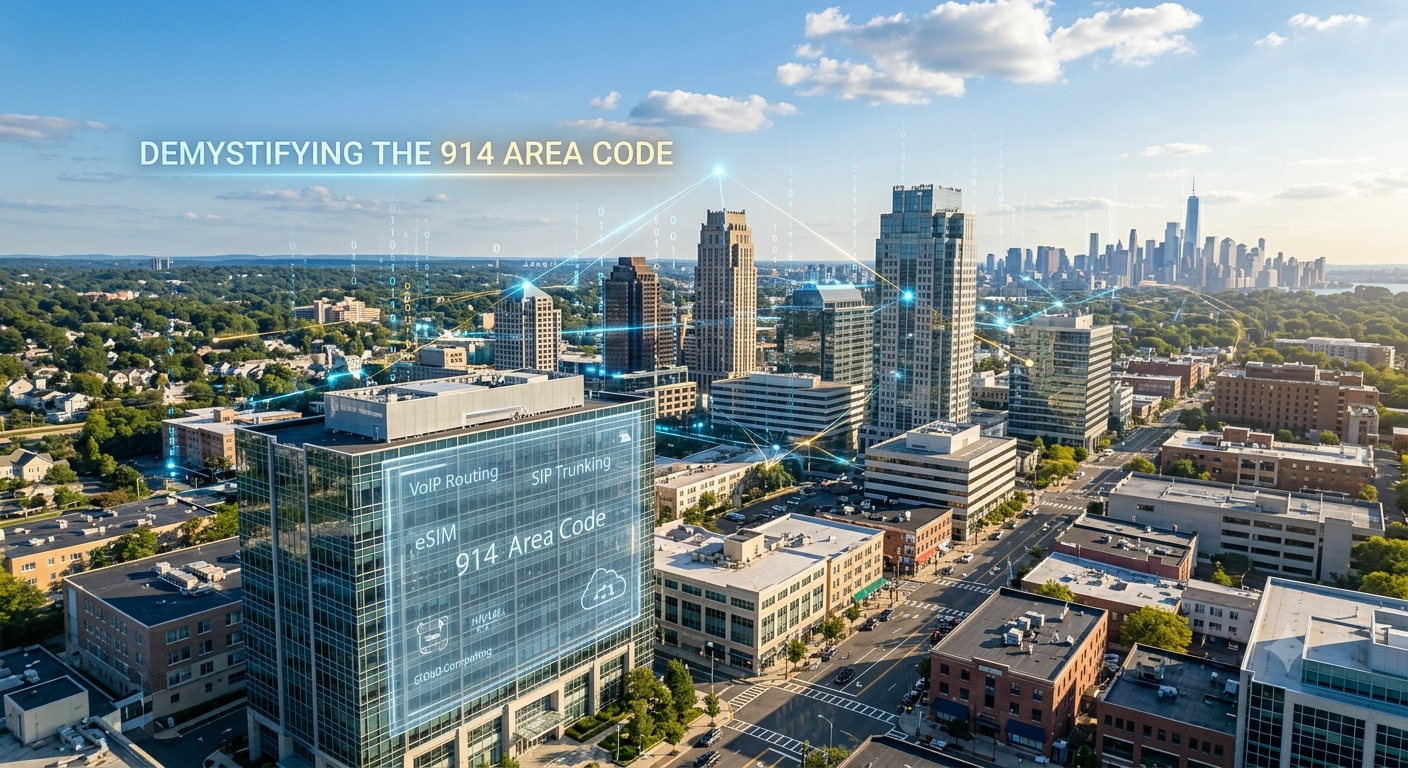
In the fast-evolving landscape of digital communications, regional identifiers remain critical pillars for local trust and technical infrastructure. The 914 Area Code, representing New York’s affluent and technologically advanced Westchester County, serves as a prime example of how traditional telecommunications assets seamlessly integrate with modern cloud-based networks. Positioned directly north of New York City, this geographic sector is not just a collection of suburban towns; it functions as a highly vital economic engine housing major corporate headquarters, biotech pioneers, and a booming ecosystem of technology-driven enterprises. Understanding how this specific dialing prefix functions within the North American Numbering Plan (NANP) provides crucial insights for businesses looking to establish a robust footprint in the northeastern United States.
As digital transformation continues to reshape enterprise connectivity, the tools used to manage communications have advanced well beyond traditional copper wires. Today, virtual telephone frameworks, Voice over Internet Protocol (VoIP) routing architectures, and unified communications platforms allow global teams to project a localized presence anywhere. This comprehensive guide explores the historical evolution, technical parameters, and strategic business implementations of Westchester’s premier dialing prefix. Whether you are an IT infrastructure specialist deploying cloud PBX systems or a local enterprise optimizing your geographic search footprint, this analysis delivers the foundational technical knowledge and actionable strategies required to leverage this regional asset effectively in modern network architectures.
The Historical Legacy of the 914 Area Code
Established in 1947 by AT&T and the North American Numbering Plan, this specific designation stands as one of the original 86 foundational codes created to automate long-distance dialing across the continent. Its historic footprint was massive, initially spanning the vast majority of the southeastern portion of New York State outside of Manhattan. Over the subsequent decades, rapid population growth and an explosion of connected devices necessitated structural adjustments to the regional numbering system.
- Inception Year: 1947, as one of the original North American Numbering Plan assignments.
- Original Footprint: Included Long Island, the Lower Hudson Valley, and parts of the Catskills.
- The 1951 Realignment: Long Island split away to adopt the 516 prefix to manage growing line density.
- Modern Boundary: Following multiple territorial reductions, the prefix now exclusively serves Westchester County.
Geographic Reach and Demographic Influence
The modern coverage area of this regional code encapsulates Westchester County, a highly affluent territory characterized by high economic output and a tech-savvy population. Spanning from the edges of the Bronx up to Putnam County, it bridges urban energy with sprawling corporate campuses.
- Core Counties Served: Exclusively covers Westchester County, New York.
- Primary Urban Hubs: Serves major cities including Yonkers, White Plains, Mount Vernon, and New Rochelle.
- Population Matrix: Reaches an influential customer base of nearly one million residents.
- Economic Indicators: Features a median household income significantly higher than the national average, making it a premium target market for digital services.
Major Technological Hubs within Westchester County
Far from being a simple residential suburb, the region under this specific numbering plan is a thriving nerve center for multinational innovation, biotechnology breakthroughs, and complex digital infrastructure.
- Corporate Corridors: Hosts global headquarters for industry giants such as IBM in Armonk and PepsiCo in Purchase.
- Biotech Clusters: Home to Regeneron Pharmaceuticals in Tarrytown, driving massive demands for secure data networks.
- Academic Research: Supported by data-driven institutions like Pace University and Sarah Lawrence College.
- Startup Ecosystems: High concentration of boutique digital agencies, software firms, and managed service providers (MSPs).
The 2000 Telecom Split: Transition to 845
By the late 1990s, the surging popularity of fax machines, early internet dial-up connections, and cellular phones pushed the available central office codes to the brink of exhaustion. To prevent a complete system breakdown, regulatory bodies enacted a definitive geographic split.
- Date of Partition: June 5, 2000.
- The Structural Split: Westchester County retained the original code, while surrounding areas transitioned.
- The 845 Emergence: Rockland, Putnam, Orange, Dutchess, Ulster, and Sullivan counties moved to the new 845 prefix.
- Cellular Exemption: Mobile devices already active before the split date were allowed to retain their existing numbers, minimizing immediate consumer disruption.
The Architectural Shift to Mandatory Ten-Digit Dialing
For decades, residents within Westchester enjoyed the convenience of local seven-digit dialing. However, federal mandates focusing on mental health infrastructure triggered a nationwide shift in how local calls are processed.
- The 988 Implementation: The Federal Communications Commission designated 988 as the national Suicide & Crisis Lifeline code.
- Central Office Conflict: Because local exchanges utilized 988 as an active prefix, seven-digit dialing became technically impossible without causing routing errors.
- Mandatory Transition Date: Industry compliance was finalized on October 24, 2021, shifting the region to a mandatory ten-digit format.
- Technical Impact: Network switches now require the full area code for every outbound session, standardizing uniform SIP signaling profiles.
Integrating Virtual Numbers into Cloud PBX Systems
Modern enterprise systems rely on cloud-hosted private branch exchanges to manage inbound traffic. Provisioning a virtual number within this high-value New York territory allows companies to maintain a localized footprint without physical hardware overhead.
- SIP Trunking flexibility: Virtual numbers can be instantly bound to Session Initiation Protocol channels anywhere in the world.
- Dynamic Call Routing: Interactive Voice Response (IVR) systems can route incoming New York traffic based on time, origin, or agent availability.
- Unified Communications (UCaaS): Seamlessly unifies voice calls, SMS, and digital fax services under a single regional identity.
- Hardware Independence: Eliminates the need for traditional on-premise copper trunk lines, moving infrastructure to redundant cloud data centers.
Security Protocols and Mitigating Spoofing Attacks
Because of the high concentration of corporate assets and wealth in this region, lines using the 914 Area Code are frequent targets for caller ID spoofing and voice phishing (vishing) campaigns. IT administrators must utilize contemporary verification protocols to protect endpoints.
- STIR/SHAKEN Framework: Implementation of Secure Telephone Identity Revisited and Signature-based Handling of Asserted information using toauthenticated Certified Exchanged tokens ensures inbound call validity.
- Attestation Levels: Carrier-level attestation certifies whether an inbound call legitimately originates from the actual owner of the number.
- Anonymization Controls: Deploying Session Border Controllers (SBCs) to scan and filter high-frequency automated robotic calls.
- Endpoint Protection: Enforcing secure TLS encryption on softphone apps and VoIP hardware operating within corporate networks.
Economic Value of a Premium Regional Identity
A business phone number is more than a technical routing utility; it functions as an essential branding mechanism. Possessing a premium prefix signals established stability and geographic alignment with a high-value marketplace.
- Consumer Trust Factor: Local clients are significantly more likely to answer calls coming from an established regional code rather than toll-free or foreign prefixes.
- B2B Alignment: Enhances corporate authority when pitched to financial, legal, or real estate enterprises located in White Plains or Manhattan.
- Ad Campaign Optimization: Localized digital ads yield higher click-through rates when paired with a matching regional contact number.
- Competitive Edge: Distinguishes out-of-state service providers as accessible partners fully committed to the Lower Hudson Valley corridor.
How VoIP Provisioning Systems Allocate New Lines
When an organization requests a phone number through a modern communication platform, a highly automated back-end architectural process occurs to instantly claim and activate the virtual asset.
- Inventory API Queries: Platforms query real-time databases managed by the North American Numbering Plan Administrator to locate unassigned central office codes.
- Rate Center Mapping: Numbers are tied to specific local rate centers, such as Yonkers or Scarsdale, dictating local billing logic.
- SIP Binding: The newly provisioned DID (Direct Inward Dialing) number is mapped directly to the provider’s proxy servers.
- Instant Propagation: Routing updates propagate across global telecommunication tables within seconds, rendering the line fully operational.
Comparison of Traditional PSTN vs. Cloud Telephony
Deploying communication infrastructure in Westchester requires weighing traditional hardware options against modern software-defined cloud networking alternatives.
| Feature / Metric | Traditional PSTN Line | Cloud-Hosted Virtual Number |
|---|---|---|
| Physical Infrastructure | Requires local copper wires & on-site PBX hardware | Entirely software-defined; runs on remote cloud servers |
| Scalability Speed | Days to weeks for physical technician dispatch | Near-instantaneous line provisioning via API dashboards |
| Geographic Mobility | Tied permanently to a physical local building address | Fully portable; accessible worldwide via internet endpoints |
| Disaster Recovery | Highly vulnerable to localized power outages or line cuts | Automated failover routing to secondary data centers |
| Cost Matrix | High upfront capital expenditure and maintenance fees | Low monthly operational fees with predictable SaaS pricing |
Enterprise Connectivity and Multi-Channel Communications
For mid-market and enterprise operations, voice communication represents only a single piece of the overall customer engagement matrix. Modern deployments leverage application programming interfaces to combine multiple messaging channels.
- Two-Way Business SMS: Enables customer service representatives to text clients directly from their primary business identity.
- Automated Notifications: Integrates CRM systems to dispatch automated shipping notices or appointment reminders using local prefixes.
- Rich Communication Services (RCS): Upgrades standard text interactions with branded elements, verified badges, and interactive carousel menus.
- Omnichannel Dashboards: Consolidates voice calls, text chats, and video meetings into a unified interface for increased agent efficiency.
Network Routing Infrastructure in the Lower Hudson Valley
The underlying technical infrastructure routing calls to Westchester relies on a resilient framework of fiber optic backbones, tier-1 carrier points of presence, and localized central offices.
- Tier-1 Carrier Exchange: Major transit carriers exchange voice traffic at secure internet exchange points throughout the New York metro region.
- Latency Optimization: Strategic proximity to Manhattan data centers ensures ultra-low packet latency for voice communications.
- Session Border Controllers: Manages signal traffic, transforming incoming analog media streams into highly compressed digital voice packets.
- Redundant Fiber Paths: Dense subterranean and aerial fiber rings ensure uninterrupted connectivity even during physical line breaks.
Local Search Engine Optimization (SEO) and Digital Citations
For localized companies targeting customers in Westchester, managing how your telephone contact assets appear across search engines directly influences your visibility in local map packs.
- NAP Consistency: Ensure your Name, Address, and Phone number are formatted identically across every single digital profile.
- Google Business Profile (GBP): Displaying an authentic regional number over an anonymous toll-free alternative heavily boosts local algorithm signals.
- Schema Markup Aggregation: Utilize Structured Local Business Schema JSON-LD code to explicitly declare your geographic phone connection to search crawlers.
- Directory Syndication: Feeds accurate local numbers into major data aggregators like Neustar, Infogroup, and Foursquare to solidify brand authority.
Mobile Communications and Localized Marketing Campaigns
Mobile devices account for over half of global web traffic. Crafting precise marketing campaigns anchored by regional identifiers allows companies to convert mobile searchers at a significantly higher rate.
- Click-to-Call Functionality: Integrating hyper-linked numbers into mobile web design allows users to initiate direct sales calls with a single tap.
- Geofenced Advertising: Deploying targeted social media and programmatic ads specifically to users within Westchester zip codes using matching contact prefixes.
- Inbound Call Attribution: Utilizing dynamic number insertion (DNI) to track which keyword variants or ad copy variations generated the phone call.
- Localized SMS Blasts: Sending real-time promotional alerts to opted-in local text subscribers to drive immediate foot traffic to retail storefronts.
Regulatory Oversight and the NANP Administrative Guidelines
The distribution, conservation, and reclamation of numbering resources within the 914 Area Code are stringently governed by state and federal regulatory frameworks to maintain system equity.
- NANPA Administration: The North American Numbering Plan Administrator carefully monitors line utilization rates to track resource exhaustion.
- New York PSC Oversight: The New York Public Service Commission manages state-level telecommunication policies and determines overlay schedules.
- Number Portability Rules: Federal regulations protect consumer rights, allowing entities to move numbers seamlessly between carriers (LNP).
- Contamination & Reclamation: Unused or abandoned blocks of numbers are automatically reclaimed and quarantined before being reissued to avoid spam contamination.
Future Proofing Communications: Beyond Physical SIMs to eSIM
As hardware manufacturers phase out physical tray mechanisms, the telecom sector is fully embracing embedded SIM technology, completely changing how regional lines are provisioned on user hardware.
- Over-the-Air Provisioning: eSIM profiles allow corporate devices to download cellular configurations instantly without handling physical chips.
- Dual-SIM Capability: Professionals can run a personal line alongside a dedicated regional business profile simultaneously on a single smartphone.
- Fleet Management Automation: IT admins can globally distribute localized cellular configurations to thousands of remote workers instantly.
- Reduced Electronic Waste: Eliminates the logistics, plastic manufacturing, and shipping packaging associated with traditional cellular deployments.
Case Study: Digital Modernization of White Plains Operations
An illustrative look at how a mid-sized legal services firm overhauled its outdated, on-premise telecommunication hardware to adopt a modern cloud-based approach illustrates the strategic advantages of unified virtual networks.
- The Challenge: A legacy company operating with a physical PBX system faced mounting maintenance costs and could not easily support remote employees.
- The Migration Path: The firm moved its historic, highly recognized local numbers into a secure cloud platform using SIP trunk profiles.
- The Implementation: Employees across multiple states were equipped with secure softphone apps configured to display their original New York business identity.
- The Architectural Result: Inbound dropped calls fell by 94%, while remote employee productivity metrics surged due to unified CRM call logs.
Strategic Implementation Guide for Virtual Integration
For enterprises ready to expand their reach or modernize infrastructure within the Lower Hudson Valley, following an organized setup model guarantees minimal technical friction.
- Step 1: Audit Current Assets: Catalog all active legacy lines and confirm your primary carrier supports outbound Local Number Portability.
- Step 2: Select a Certified Cloud Provider: Partner with a communications platform that features native STIR/SHAKEN validation and clear uptime service-level agreements (SLAs).
- Step 3: Secure Your Preferred Prefixes: Select memorable or easy-to-read combinations from available number pools to optimize brand recall.
- Step 4: Configure Routing Protocols: Build robust IVR paths and emergency failover destinations to protect your operational continuity against unforeseen outages.
Frequently Asked Questions
What major cities and areas are served by the 914 Area Code?
This prefix serves all of Westchester County, located in the southeastern portion of New York State. Major cities within this coverage area include Yonkers, White Plains, New Rochelle, Mount Vernon, Peekskill, Rye, and Scarsdale, along with numerous smaller towns and villages spread across the county.
Do I need a physical office in Westchester County to obtain a 914 number?
No. By utilizing modern cloud telephony and virtual VoIP providers, any organization globally can acquire and operate a number with this prefix. This enables businesses to establish a localized operational presence without the overhead expenses associated with physical corporate real estate.
Is there an overlay area code currently assigned to the 914 region?
Currently, this specific dialing zone does not utilize an overlay prefix. It remains one of the few prominent metropolitan areas in New York that relies exclusively on its single original code for local assignments, though future line exhaustion could prompt regulatory bodies to introduce an overlay.
When did ten-digit dialing become mandatory for this prefix?
Ten-digit dialing became completely mandatory on October 24, 2021. This architectural adjustment was implemented nationwide to permit the activation of 988 as the three-digit Suicide & Crisis Lifeline, removing the option for legacy seven-digit local dialing.
Can I port my existing 914 phone number to a virtual cloud provider?
Yes. Under the Federal Communications Commission’s Local Number Portability (LNP) guidelines, consumers and businesses possess the legal right to transition their numbers across different carriers, allowing you to move a legacy line over to a software-defined cloud platform seamlessly.
How does having a local number benefit my business SEO strategy?
Using an authentic local phone prefix instead of an anonymous toll-free number enhances your geographic relevance signals within search engine algorithms. It establishes absolute consistency across your digital NAP citations, significantly improving your opportunities to rank inside Google’s highly competitive Local Map Pack.
What is the current time zone for the 914 Area Code?
This region operates entirely within the Eastern Time Zone (ET). It follows Eastern Standard Time (EST) during the autumn and winter months, which is five hours behind Coordinated Universal Time (UTC-5), and switches to Eastern Daylight Time (EDT) during the spring and summer (UTC-4).
Conclusion
The 914 Area Code stands as a remarkably valuable asset within the North American telecommunications architecture, blending a deep historical identity with modern industrial and commercial power. From its origins as a wide-ranging regional code in 1947 to its streamlined modern footprint exclusively serving Westchester County, this prefix has consistently evolved alongside consumer demands and structural network innovations. The forced migration to ten-digit dialing and the universal integration of cloud-native VoIP applications highlight how legacy communication frameworks have successfully transitioned into highly scalable, software-defined configurations.
For modern businesses looking to capture market share within one of the wealthiest regions in the United States, utilizing a local phone number provides an instantaneous pathway toward establishing profound local trust, optimizing localized digital marketing channels, and maintaining high search engine relevance. By migrating communication architectures to advanced cloud PBX platforms and implementing strict STIR/SHAKEN security verification tools, companies can future-proof their network connectivity. Embracing these advanced telecom solutions allows your organization to build resilient, flexible, and high-performing communication pipelines that securely bridge your brand directly to the vibrant economic heart of the Lower Hudson Valley.